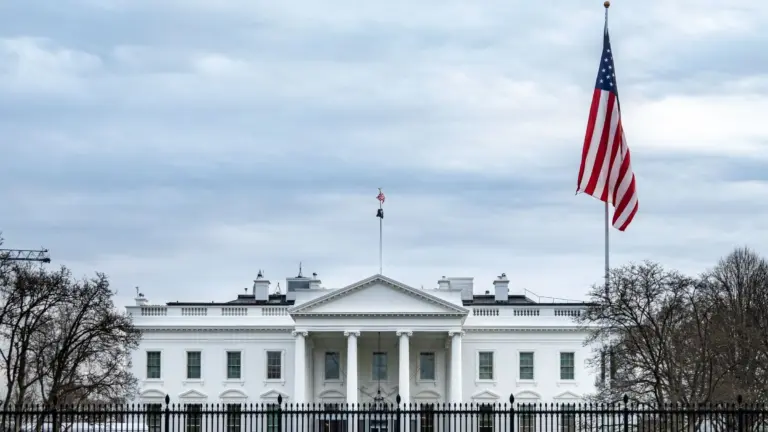


Image Credit: Shutterstock
Key Takeaways
- The White House says it is still working out how to structure the federal Bitcoin reserve ordered by Trump in March 2025
- Treasury and Commerce are both seeking to administer the fund, and no final decision has been announced
- Officials say Congress must still authorize the reserve, and no legislation has advanced in either chamber
The White House says it is still working out how to structure a federal Bitcoin reserve, more than a year after President Donald Trump ordered the effort. A dispute over which federal department should house the fund has complicated the process, according to a report on the matter, and Congress has not advanced legislation that administration officials have said the plan ultimately needs.
Treasury and Commerce Both Under Consideration
Trump signed an executive order in March 2025 directing his administration to build a strategic reserve for Bitcoin and a separate stockpile of other cryptocurrencies. Federal agencies have since reviewed the government’s existing crypto holdings, though the administration has not disclosed that total figure.
A report on the matter said the process has been complicated by both the Treasury and Commerce departments making a case to administer the funds. No final decision on which agency will oversee the reserve has been announced. White House spokeswoman Liz Huston addressed the delay in a statement.
“President Trump campaigned on a vision of cementing America as the global capital of cryptocurrency and other cutting-edge technologies. To deliver on the president’s vision, the Trump administration continues to evaluate the best structure for a Strategic Bitcoin Reserve and U.S. Digital Asset Stockpile.”
Officials Say Congressional Action Is Still Required
Patrick Witt, the White House’s chief crypto adviser, and his predecessor in the role have both said the administration will need Congress to formally authorize and activate the crypto funds. Presidential executive orders do not carry the force of law on their own.
No legislation addressing the reserve has advanced in either chamber, though lawmakers in the Senate and House of Representatives have continued discussing potential bills. If Republicans lose their majority in the House, or in both chambers, following this year’s midterm elections, the odds of such legislation advancing would decline further.
Structure Questions Leave Actual Bitcoin Purchases Unresolved
Even once the administration settles on a structure, it remains unclear whether officials will move the government’s existing Bitcoin holdings, estimated at more than 300,000 BTC and valued at roughly $21 billion, into the reserve.
The administration has described the reserve as a long-term holding rather than a fund meant to be drawn down during market emergencies. Some policy analysts have noted that this framing differs from how the term “strategic reserve” is typically used in other federal contexts.
Bitcoin’s Price Has Fallen Since the Order Was Issued
When Trump signed the executive order, he directed the administration to explore ways to acquire additional Bitcoin without using taxpayer funds. Several proposals have circulated since then, though none has resulted in confirmed purchases.
Bitcoin traded near $93,000 at the time of the executive order and has since fallen by about a third, trading just above $64,000 as of this reporting.
Many crypto industry participants said they had treated the Bitcoin reserve as effectively finalized when Trump first announced it, and digital asset advocates and lobbyists have expressed frustration over the extended timeline, with no guaranteed date for implementation. Separately, Trump’s own personal Bitcoin holdings have grown to more than $50 million, according to his most recent financial disclosure.