Key Takeaways
- Adam Back denies being Satoshi but cannot cryptographically prove it.
- Circumstantial evidence links him to Bitcoin’s creation, but nothing is definitive.
- The mystery benefits Bitcoin, keeping it decentralized and leaderless.
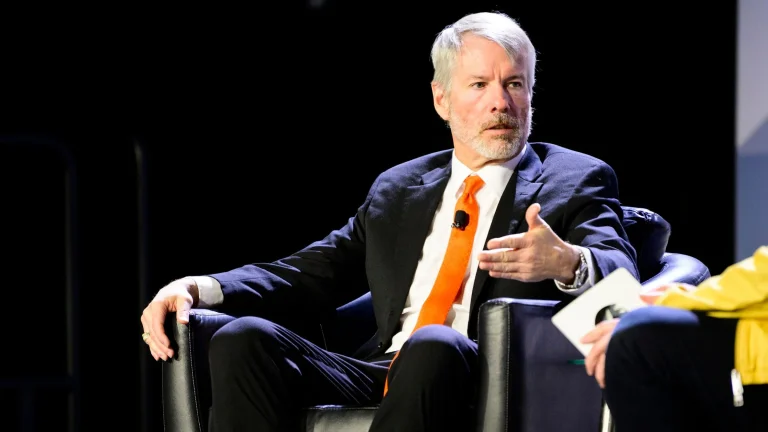
Adam Back denied claims in a recent The New York Times investigation that identified him as a leading candidate for the identity of Satoshi Nakamoto,
His response on X to an investigation by journalist John Carreyrou for The New York Times:
“I’m not Satoshi.”
He didn’t elaborate much, which Back did not provide additional comment beyond the denial, is either the response of an innocent man tired of a recurring accusation or a very disciplined non-answer.
The investigation relied primarily on historical correspondence, linguistic analysis, and technical background comparisons rather than cryptographic attribution.
Back is the CEO of Blockstream, a Bitcoin infrastructure companyand one of the more significant figures in Bitcoin’s intellectual prehistory. He was active on the Cypherpunks mailing list from the early 1990s, contributing to discussions about digital cash, cryptographic privacy, and the politics of money.
Most relevantly, he invented Hashcash, a proof-of-work system later cited in the Bitcoin white paper. His early work on proof-of-work systems and participation in Cypherpunks discussions placed him among several figures frequently cited in discussions about Bitcoin’s origins.
He’s also aware of why that makes him a recurring target. In his post, he argued that his visibility in the historical record creates a kind of confirmation bias for investigators: his archive of writing is large, his ideas overlap with Bitcoin’s design, and his fingerprints are on enough foundational discussions that pattern-matching will keep pointing back to him. Back said his extensive public record from early cryptography discussions has contributed to recurring speculation about his possible connection to Bitcoin’s creation.
A Profile That Fits – Up to a Point
Carreyrou’s investigation assembles a genuinely compelling circumstantial case. Back is British, matching what is known about Satoshi’s background. The report identified more than 100 overlapping words and phrases between Satoshi’s writings and Back’s archived mailing-list posts.
It also highlights a 2002 post in which Back asked about Executive Order 6102 – the Depression-era order requiring Americans to surrender gold – a piece of monetary history that later appeared as a symbolic reference in discussions surrounding Bitcoin’s monetary design. The report also noted Back’s background in distributed systems and C++.
What it doesn’t include is anything close to proof. Carreyrou wrote in the report that definitive attribution would require cryptographic proof:
“The only true smoking gun is cryptographic proof, and only Adam can provide that. Linguistic overlap and shared intellectual interests are the kind of evidence that sounds compelling in a long-form investigation and would be dismissed immediately in any other evidentiary setting.”
The Emails, and Why They Don’t Settle It
The most contested element involves emails between Back and Satoshi from August 2008, introduced as evidence during litigation involving Craig Wright’s claims to be Satoshi Nakamoto, in which Satoshi contacted Back to verify the Hashcash citation before publishing the white paper.
Most readers take those as evidence of two separate people. Carreyrou raises the possibility that Back wrote both sides himself as misdirection – a possibility the report raised but which has not been independently verified
Back added that not knowing Satoshi’s identity is good for Bitcoin, reinforcing its standing as “a new asset class, the mathematically scarce digital commodity.”
Back also argued that uncertainty surrounding Satoshi’s identity has contributed to Bitcoin’s perception as a decentralised and founder-independent system.