Image Credit: Shutterstock
Key Takeaways
- Samsung and SK Hynix plan to invest $518 billion in South Korean semiconductor factories, targeting AI chip demand and a doubling of DRAM output within five years.
- U.S. spot Bitcoin ETFs recorded record outflows in the first half of 2026, with capital rotating into AI equities and leaving crypto competing for a narrower share of risk appetite.
- Bitcoin miners are redirecting computing capacity toward AI hosting contracts, reducing their direct exposure to Bitcoin price volatility.
Samsung Electronics and SK Hynix have announced plans to invest roughly $518 billion in new semiconductor factories in South Korea, targeting AI chip demand. The announcement comes as Bitcoin trades near $60,000 heading into the second half of 2026, U.S. spot Bitcoin ETFs post record outflows, and Bitcoin miners redirect computing capacity toward AI hosting contracts.
Samsung and SK Hynix Lay Out a Decade-Long AI Infrastructure Bet
Samsung Electronics and SK Hynix said Monday they plan to invest roughly 800 trillion won, or about $518 billion, to build four chip fabrication plants in South Korea’s southwest. The stated goal is to double the country’s output of DRAM within five years.
A South Korean presidential adviser said AI demand could push completion of that buildout to 2034 or 2035, more than a decade ahead of an earlier 2044 target. SK Hynix separately announced plans last week for a U.S. stock listing targeting approximately $29 billion, which would rank among the largest U.S. listings on record.
HBM Is the Product at the Center of the AI Supply Chain
The driver behind both the investment and the competition is high-bandwidth memory, the specialized chip architecture that feeds AI training workloads and the large language models powering consumer products like ChatGPT.
SK Hynix has become the dominant HBM supplier, a position that made it South Korea’s most valuable listed company this month for the first time in 25 years, passing Samsung. The two firms together supply most of the world’s HBM output and have struck supply agreements with Nvidia and OpenAI.
Bitcoin ETFs Post Record Outflows as AI Stocks Draw Capital in 2026
Gabe Selby of CF Benchmarks said much of the new money and attention has flowed into AI plays, leaving digital assets competing for a narrower slice of overall risk appetite. U.S. spot Bitcoin ETFs recorded back-to-back record outflow streaks in May and June. They shed more than $4.4 billion over 13 consecutive sessions in June alone. This followed a separate 10-session streak in May that drained an estimated $2.8 billion, according to SoSoValue data.
The two streaks pushed 2026 year-to-date cumulative ETF flows into negative territory for the first time. Crypto prices fell through much of the month even on days when AI chip stocks recovered. Gold, silver, and Bitcoin sold off in tandem in recent weeks as a hedge trade unwound, while AI equities gained during the same period, according to Selby.
Bitcoin Miners Redirect Capacity Toward AI Hosting Contracts
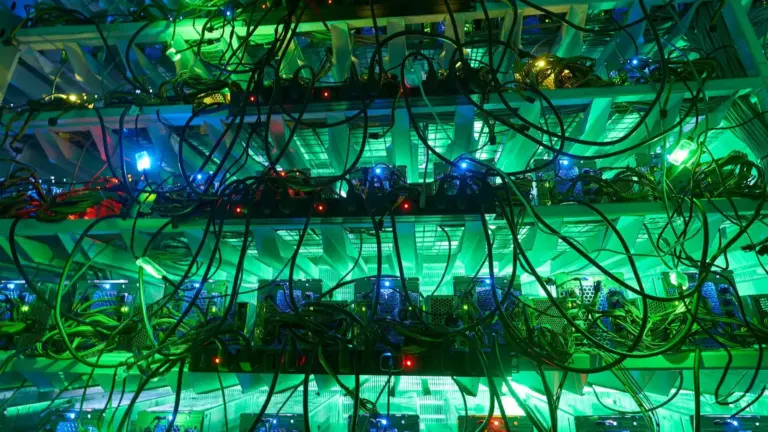
Bitcoin miners have been redirecting computing capacity toward AI hosting arrangements, where contracted payments offer more predictable revenue than mining income tied to Bitcoin’s price and network difficulty.
That shift reduces miners’ direct exposure to Bitcoin price movements. Miners that might previously have held or accumulated Bitcoin as a balance sheet asset are now directing capacity toward AI hosting contracts instead.
Bitcoin Trades Near 200-Week Moving Average to Close First Half of 2026
Bitcoin is close to ending the first half of 2026 below $60,000, trading near its 200-week moving average, a long-term trend line closely watched by technical analysts. U.S. spot Bitcoin ETFs have recorded record outflows during the period, and the reallocation of miner capacity toward AI hosting has reduced one historically consistent source of Bitcoin exposure.