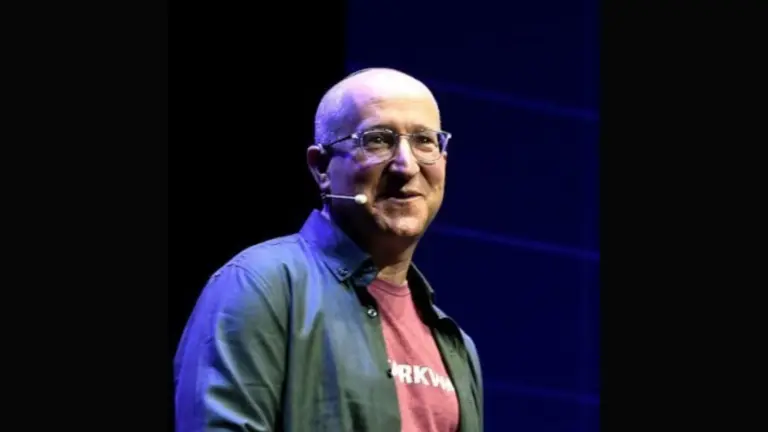


Image Credit: Eli Ben-Sasson (X)
Key Takeaways
- StarkWare CEO Eli Ben-Sasson proposed replacing Bitcoin’s 21 million cap with up to 4% annual issuance to offset lost coins
- Estimates suggest between 2.3 million and 4 million BTC are permanently lost due to inaccessible private keys
- Bitcoin supporters pushed back, arguing the fixed cap is core to the asset’s value, while Zcash’s community discusses a different burn-and-reissue model
StarkWare CEO Eli Ben-Sasson has reignited debate over Bitcoin’s fixed supply cap, arguing in a Tuesday X post that lost private keys make the 21 million limit worth reconsidering. Bitcoin supporters pushed back quickly, arguing the fixed cap is central to the asset’s value.
Ben-Sasson Proposes Replacing the Cap With Fixed Annual Issuance
Ben-Sasson wrote that Bitcoin’s 21 million supply cap “doesn’t make sense” because private keys get lost permanently over time, gradually shrinking the amount of Bitcoin that can actually be spent. He argued that over a long enough timeframe, a growing share of the total supply could become unreachable.
In place of the fixed cap, Ben-Sasson proposed a hard issuance rule of up to 4% per year. He said the figure roughly tracks global population growth while still keeping Bitcoin’s supply scarce under a predictable, rules-based schedule.
Lost Keys Already Remove Coins From Circulation
Bitcoin has no password-reset mechanism. When a private key is lost, the associated coins remain on the blockchain but cannot be moved or spent, permanently reducing the supply available for trading.
Ledger has estimated that between 2.3 million and 3.7 million BTC are permanently lost. Other researchers have placed the figure closer to 4 million BTC. Ben-Sasson pointed to this pattern to argue that a fixed cap could gradually undermine Bitcoin’s usability over very long periods, since lost supply cannot be replaced under the current model.
His view runs counter to a widely held position within the Bitcoin community, where many supporters treat lost coins as a feature of the asset’s scarcity rather than a flaw. Under this view, lost coins function as an informal transfer to remaining holders, since the usable supply shrinks while the total cap stays fixed.
Bitcoin Supporters Reject the 4% Issuance Idea
The proposal drew swift criticism from Bitcoin users on X. Critics argued the 21 million cap is one of Bitcoin’s defining features and that altering it would make the asset resemble other cryptocurrencies with flexible issuance schedules.
Some critics also pointed to Bitcoin’s divisibility as a counterargument. Bitcoin can be split into 2.1 quadrillion satoshis, meaning payment-sized units could remain accessible even if whole-coin amounts become scarcer.
Ben-Sasson responded that satoshi-denominated units would face the same long-term erosion if private key losses continue, since the underlying coins would remain unreachable no matter how finely they are divided. He maintained that Bitcoin could preserve scarcity under a fixed and predictable inflation rate rather than a hard cap.
The exchange also drew a connection to past comments from Strategy executive chairman Michael Saylor, who has described burning Bitcoin private keys as a “pro rata contribution” to other holders. Saylor did not commit to burning his own holdings in those remarks.
Zcash’s Burn-and-Reissue Model Offers a Different Approach
Zcash founder Bryce “Zooko” Wilcox pointed to an alternative under discussion within the Zcash community: a proposed Network Sustainability Mechanism that would let users burn ZEC and gradually reissue those coins as future block rewards, without raising Zcash’s own 21 million-unit supply cap.
The mechanism is designed to support long-term miner incentives while preserving a fixed total supply. It differs from Ben-Sasson’s proposal in that it would not raise the network’s lifetime issuance limit, only redistribute already-issued coins over time.
Any Cap Change Would Require Broad Network Agreement
Altering Bitcoin’s supply cap would face significant technical and social hurdles. While developers can propose code changes, implementation would require broad agreement across node operators, miners, exchanges, wallet providers and users, a bar that has historically been difficult to clear for changes to Bitcoin’s core monetary policy.
StarkWare has previously focused on bringing scaling tools to Bitcoin without forking Starknet or launching a separate token. Ben-Sasson’s latest proposal shifts that conversation from scaling infrastructure into monetary policy, an area where Bitcoin’s user base has historically resisted proposed changes, based on past debates over the network’s monetary policy.