

Image Credit: Wikipedia
Key Takeaways
- Buterin’s draft roadmap proposes embedding privacy directly into Ethereum’s protocol rather than at the application layer
- Cryptographic systems including BLS signatures, KZG commitments and ECDSA would eventually be replaced with post-quantum alternatives
- The roadmap arrives amid Ethereum Foundation restructuring, including a roughly 20% workforce cut
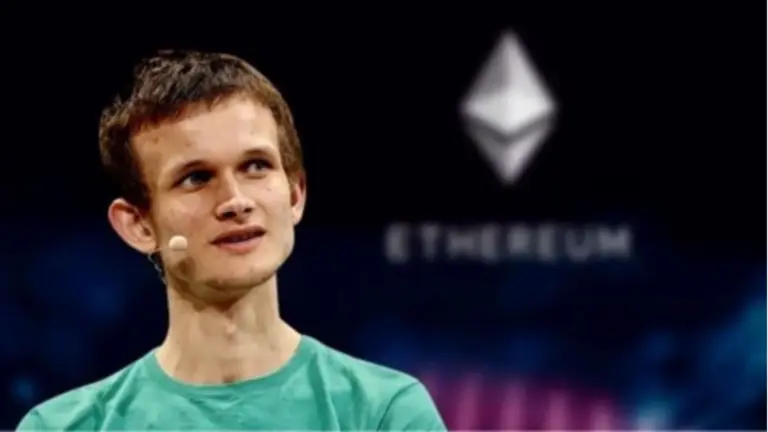
Ethereum co-founder Vitalik Buterin has published a multi-year roadmap centered on native privacy, quantum-resistant cryptography and protocol simplification. Buterin described it as the network’s largest transformation since its 2022 transition to proof-of-stake. The plan remains a draft rather than a finalized implementation schedule.
A Roadmap Shared Following Berlin Discussions
The proposal appeared on Strawmap.org and was shared by Buterin in an X post on July 6. According to the document, the changes are expected to roll out over the next three to four years, following discussions among Ethereum researchers in Berlin.
The roadmap spans nearly every layer of the network and represents what Buterin describes as Ethereum’s third major evolution, following its shift to proof-of-stake in 2022.
Privacy Moves From Application Layer to Protocol Core
Rather than leaving privacy features to applications built on top of Ethereum, the roadmap proposes embedding privacy directly into the protocol. The document evaluates components including Frames, the transaction mempool, and future state designs based on whether they can support intermediary-free, quantum-safe privacy without adding significant computational cost.
The proposal builds on privacy concepts Buterin first outlined in May 2026, expanding on ideas that began as incremental improvements into a broader redesign of the protocol’s core infrastructure.
Buterin wrote in the document that quantum safety has become a substantially higher priority than before. The roadmap flags work on quantum-safe blob designs, which underpin Ethereum’s rollup-based scaling approach, as an urgent area of focus.
Cryptographic Systems Face Post-Quantum Replacement
The proposal states that several cryptographic systems Ethereum currently relies on, including BLS signatures, KZG commitments and ECDSA, would eventually be replaced with post-quantum alternatives. The direction aligns with post-quantum cryptography standards finalized by the U.S. National Institute of Standards and Technology in 2024.
This work extends discussions the Ethereum Foundation began earlier this year. In February 2026, the Foundation released an initial strawmap examining quantum threats facing the network, while Buterin separately outlined the network’s quantum security risks in earlier remarks. The new roadmap develops those discussions into a more detailed implementation strategy.
Recursive Proofs Aim to Simplify Transaction Verification
Beyond cryptographic changes, the roadmap proposes recursive STARK-based verification to replace the current model, in which every node re-executes every transaction. Under the proposed design, a single prover would handle the intensive computation while the rest of the network verifies a compact cryptographic proof instead.
On X, several participants discussing the roadmap noted that the draft names concrete signature schemes, cryptographic replacements and state-size targets rather than describing only high-level goals.
The Proposal Arrives Amid Foundation Restructuring
The roadmap’s release coincides with internal restructuring at the Ethereum Foundation. The organization has cut its workforce by roughly 20%, eliminating about 54 positions, and reduced its budget by a targeted 40%. Recent departures include protocol contributors Hsiao-Wei Wang, Tomasz Stańczak, Tim Beiko and Barnabé Monnot. The roadmap document did not specify whether the timing is connected to the restructuring.
Hegotá Fork Set as the Final Step Before “Lean Ethereum”
According to the document, the upcoming Hegotá fork is expected to be the last major network upgrade before Ethereum enters what Buterin calls the Lean Ethereum era, a phase in which privacy, scalability and quantum resistance would function as core protocol requirements rather than optional additions.