

Image Credit: Shutterstock
Key Takeaways
- The U.S. joined Japan in coordinated FX intervention Friday, pulling USD/JPY back from a near-40-year low of 164 to 156.5.
- The move revived comparisons to August 2024, when a yen carry trade unwind drove Bitcoin down roughly 20% in a week.
- Bitcoin’s 52-week correlation with USD/JPY has been about minus 0.90, suggesting dollar strength, not the yen, has been the bigger driver.
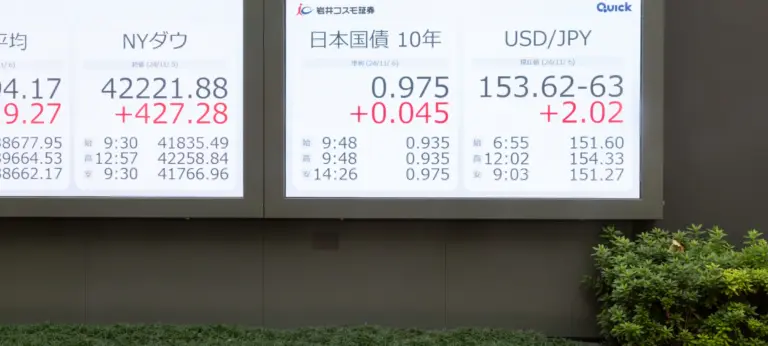
U.S. Treasury Secretary Scott Bessent confirmed Sunday that the United States joined Japan in coordinated foreign exchange intervention on Friday, aimed at countering what he called disorderly yen movements. The USD/JPY pair had approached 164, its weakest level since 1986, before reversing to 156.5 by Monday.
The intervention has revived comparisons to August 2024, when a yen carry trade unwind triggered a sharp Bitcoin selloff. But Bitcoin’s price behavior over the past year has correlated more closely with broad U.S. dollar strength than with the carry trade, according to market data detailed below.
The Intervention and Bessent’s Comments
Bessent said in an X post that the U.S. would not hesitate to join further coordinated intervention if needed, adding that Washington backs Tokyo’s efforts to correct what he described as a substantial undervaluation of the yen.
The joint action marks a rare instance of direct U.S. involvement in defending the yen, following a currency slide that had pushed USD/JPY toward levels last seen nearly four decades ago.
The comparison to August 2024 stems from a well-documented episode. That month, the Bank of Japan unexpectedly raised its policy rate to 0.25%, strengthening the yen and forcing investors holding yen-funded carry trades to unwind leveraged positions across risk assets.
Bitcoin fell from roughly $62,000 to $49,000 in about a week, a drawdown of around 20%, as carry traders sold holdings to cover yen-denominated losses. The episode left a lasting association in crypto markets between yen strength and Bitcoin selloffs.
The Bank of Japan’s Current Stance
The BOJ held its policy rate at 1% at its meeting last week. Governor Kazuo Ueda pointed to AI-related demand and yen weakness as the two factors pushing inflation above the central bank’s 2% target.
Unlike August 2024, the current yen move has come through direct government intervention rather than a surprise rate hike. That is a different mechanism than the one seen in 2024, when a policy rate change directly squeezed leveraged funding positions.
What the Data Show This Time
Data compiled by TradingView show Bitcoin’s 52-week rolling correlation with USD/JPY has reached roughly minus 0.90 over the past year, meaning Bitcoin has tended to fall alongside a weakening yen rather than a strengthening one. That pattern runs counter to the carry-trade theory now circulating around the intervention.
The correlation data show Bitcoin has more often moved with the dollar than with the yen over this period, though the data alone do not establish which factor is driving the other. A stronger yen following intervention has not, on this evidence, coincided with the kind of carry-trade-style pressure on Bitcoin seen in 2024.
Japanese government bond yields have continued climbing despite the intervention, with the 30-year yield approaching 4%. Bitcoin, meanwhile, has stayed relatively flat, trading above $63,000. Crypto markets have shown little reaction so far, even as currency volatility persists following the coordinated intervention.
What a Yen Carry Trade Means for Markets
A yen carry trade involves borrowing in yen at low interest rates to fund purchases of higher-yielding assets elsewhere, including risk assets such as equities and crypto. When the yen strengthens unexpectedly, those trades become more expensive to hold, prompting investors to sell the assets they funded with borrowed yen to cover losses.
That mechanism explains why a stronger yen has historically been treated as a warning sign for crypto markets. It is also why the current intervention drew immediate comparisons to 2024, even though this time the trigger was direct intervention rather than a rate hike.
What to Watch Next
Traders are watching whether USD/JPY stabilizes near current levels or resumes its earlier slide, since renewed weakness could prompt further coordinated action from Washington and Tokyo. The correlation data show dollar strength has aligned more closely with Bitcoin’s price than the yen alone over the past year, though additional data would be needed to establish a causal link.