How to Buy Solana: A Beginner’s Guide

Key Takeaways
- Solana processes up to 65,000 transactions per second at near-zero cost, but carries higher risk than Bitcoin or Ethereum due to network outages and price volatility.
- Buy SOL on regulated exchanges like Coinbase or Kraken, then move holdings to a self-custodial wallet like Phantom for secure long-term storage.
- Staking SOL earns 5 to 8 percent annually, but the IRS treats rewards as ordinary income at receipt, so track every transaction from day one.
If you have spent any time researching cryptocurrency, you have almost certainly come across Solana. It is one of the most talked-about blockchains in the industry, known for its remarkable speed, low transaction costs, and a developer ecosystem that has grown rapidly over the past few years.
Whether you are drawn to Solana as a long-term investment, want to participate in its DeFi ecosystem, or are simply curious about what all the attention is about, this guide will walk you through everything you need to know to buy SOL, Solana’s native token, safely and intelligently.
What Is Solana?
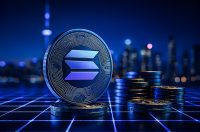
Solana is a high-performance blockchain platform launched in 2020 by Anatoly Yakovenko, a former engineer at Qualcomm. Its native cryptocurrency is SOL, which is used to pay transaction fees on the network and to participate in its proof-of-stake consensus mechanism through a process called staking.
What sets Solana apart from most other blockchains, including Ethereum, is speed. Solana can theoretically process up to 65,000 transactions per second, compared to Ethereum’s roughly 15 to 30. It achieves this through a unique mechanism called Proof of History (PoH), which creates a cryptographic record of time that allows the network to process transactions in parallel rather than sequentially.
The practical result is that transactions on Solana are confirmed in under a second and cost a fraction of a cent, making it genuinely usable for everyday applications in a way that Ethereum, with its often expensive gas fees, is not.
What Is Solana Used For?
SOL is not just a speculative asset. The Solana network underpins a thriving ecosystem of real applications. Decentralized finance (DeFi) platforms like Jupiter and Raydium allow users to trade, lend, and earn yield without a central intermediary.
The NFT market on Solana has been one of the most active in the industry, with platforms like Magic Eden facilitating billions of dollars in digital collectible trades. Consumer applications, gaming projects, and payment tools have all been built on Solana, drawn by its speed and low cost.
SOL itself has two primary roles: paying network fees (every transaction on Solana costs a tiny amount of SOL) and staking, where holders lock up their tokens to help secure the network and earn rewards in return.
Where to Buy Solana
Solana is one of the most accessible cryptocurrencies on the market today. SOL is listed on nearly every major U.S. exchange, giving buyers a range of options depending on their priorities, whether that is low fees, regulatory standing, or ease of use.
Major Centralized Exchanges
SOL is widely available on all major U.S. cryptocurrency exchanges. Unlike some smaller altcoins that are only listed on obscure platforms, Solana’s prominence means you can buy it on the same regulated, beginner-friendly exchanges you would use for Bitcoin or Ethereum. Here’s a quick comparison of the platforms available:
| Exchange | SOL Available | Notable Feature | Fee Range |
|---|---|---|---|
| Coinbase | Yes | Most beginner-friendly | 0.5–1.5% |
| Kraken | Yes | Strong security record | 0.16–0.26% |
| Gemini | Yes | NYDFS trust charter | 0.5–1.5% |
| Binance.US | Yes | Lowest fees, widest selection | 0.1–0.6% |
| Robinhood | Yes | No withdrawal to external wallet | No trading fee |
A note on Robinhood: While it allows you to buy SOL with no trading fee, it does not allow you to withdraw your Solana to an external wallet. This means you cannot move your SOL off the platform, which is a significant limitation for anyone who takes the “not your keys, not your coins” principle seriously. It is fine for pure price speculation, but not for anyone who wants genuine ownership of their SOL.
Decentralized Options
If you already hold another cryptocurrency and want to acquire SOL without going through a centralized exchange, decentralized platforms are an option. Jupiter is the most widely used decentralized exchange aggregator on the Solana network itself.
Platforms like Uniswap on Ethereum can also bridge assets across chains. These options are more complex, involve more steps, and carry more risk of user error than a centralized exchange. They are not recommended for first-time buyers.
Setting Up and Funding Your Account
Opening an account on a U.S. cryptocurrency exchange takes roughly the same effort as signing up for an online brokerage. The process involves a few standard steps, but each one carries security implications worth understanding before you proceed.
Choose and Create Your Account
If you do not already have an account on one of the exchanges listed above, the setup process is straightforward. Provide your email address, create a strong and unique password, and complete identity verification (KYC) by submitting a government-issued ID and a selfie. Verification typically takes a few minutes to a couple of business days depending on the platform.
Secure Your Account
Enable two-factor authentication (2FA) before you do anything else. Use an authenticator app like Google Authenticator or Authy rather than SMS-based verification, which is vulnerable to SIM-swapping attacks.
If the exchange offers the option to whitelist withdrawal addresses, meaning SOL can only be sent to pre-approved wallets, enable it. This single setting can prevent a thief who gains access to your account from draining your funds to an address of their choosing.
Funding Methods
Most U.S. exchanges accept the following funding methods:
- ACH bank transfer is the slowest but cheapest method, typically carrying no deposit fee. Funds take three to five business days to fully clear, and some exchanges impose a holding period before you can withdraw purchased crypto, even if they allow you to trade immediately.
- Debit card deposits are fast, often instant, but carry fees of 1.5 to 3.5 percent. For small amounts where immediacy matters, the premium may be worth it. For larger purchases, the fee is significant enough to justify waiting for an ACH transfer.
- Wire transfers are appropriate for large deposits, offering flat fees rather than percentage-based ones, making them economical at scale.
Always calculate your all-in cost before buying crypto. Trading fees, deposit fees, and any applicable network fees should all be factored into your thinking.
How to Buy SOL: Step-by-Step
With your account open and funded, buying SOL takes only a few minutes. The exchange interface will guide you through most of it, but understanding what each step involves helps you avoid common mistakes and make informed decisions.
1. Find Solana on the Exchange
Once your account is funded, navigate to the trading or buy section of your chosen exchange and search for Solana or SOL. On most platforms it will appear near the top of the asset list given its market cap ranking. Confirm you are selecting the correct asset. On some platforms with large token libraries, similarly named tokens can appear in search results.
2. Choose Your Order Type
A market order buys SOL immediately at the current market price. For a liquid, highly traded asset like Solana on a major exchange, the difference between the displayed price and the price you actually pay (slippage) will be negligible. This is the simplest and most appropriate order type for most beginners.
A limit order lets you specify the price at which you are willing to buy. If SOL is trading at $150 and you want to buy at $140, you place a limit order at $140 and wait. Your order will only execute if the price reaches your target. Limit orders give you price control but no guarantee of execution. If the price never reaches $140, your order sits unfilled until you cancel it.
A recurring purchase automatically buys a set dollar amount of SOL on a regular schedule, daily, weekly, or monthly. This is the practical implementation of dollar-cost averaging and is an excellent choice for anyone who wants to build a SOL position over time without worrying about timing the market. Most major exchanges support this feature natively.
3. Confirm the Trade
Before hitting confirm on any purchase, take thirty seconds to verify three things: you are buying SOL and not a similarly named token, the dollar amount is what you intended, and you understand the fee being charged.
The confirmation screen on most exchanges will show you the total cost including fees before you commit. Once you confirm, the trade executes within seconds and your SOL balance will appear in your exchange account.
Storing Your SOL Safely
The standard crypto storage advice applies here: leaving your SOL on an exchange indefinitely means the exchange controls your funds. For anyone holding a meaningful amount of Solana long-term, moving it to a wallet you control is worth the effort. This is especially true given the history of exchange failures in the crypto industry. Here are a few ways to store your SOL safely:
Solana-Compatible Wallets
Not all crypto wallets support Solana. Unlike Bitcoin and Ethereum, which are supported by virtually every wallet on the market, SOL requires a Solana-compatible wallet. Here are the main options:
- Phantom is a free, user-friendly browser extension and mobile app that stores your private keys locally. It integrates seamlessly with Solana’s DeFi ecosystem, making it easy to connect to applications like Jupiter or Magic Eden directly from the wallet.
- Solflare is another popular Solana-native wallet with a strong reputation for security and a clean interface. It supports staking directly from the wallet, which is convenient if you plan to earn staking rewards on your SOL.
- Ledger hardware wallets support Solana and can be used in conjunction with Phantom or Solflare for cold storage. If you are holding a significant amount of SOL long-term, a hardware wallet paired with a software interface is the most secure setup available to retail investors.
Setting Up Phantom
Phantom is the most widely used Solana wallet and a natural first choice for new SOL holders. Before you begin, understand that the setup process involves one step, securing your seed phrase, that you must get right the first time.
- Download Phantom from the official website or your device’s app store.
- Create a new wallet, and you will be given a 12-word seed phrase. This seed phrase is the master key to your wallet and everything in it.
- Write it down by hand, store it somewhere physically secure, and never type it into any website, app, or message. Anyone who has your seed phrase has full access to your funds.
- Once your wallet is set up, you can send SOL from your exchange by navigating to the withdrawal section, selecting SOL, and entering your Phantom wallet address.
- Double-check the address before confirming. Solana transactions are irreversible, and sending to a wrong address means your SOL is gone permanently.
Common Mistakes Solana Buyers Make
Most errors new SOL buyers make are not unique to Solana, but several are. Knowing the most common pitfalls before you buy is more useful than learning about them after a costly and irreversible mistake. Here they are:
Buying Purely on Price Momentum
Solana has had periods of extraordinary price appreciation that attracted waves of new buyers near the top of a cycle. Price going up is not a reason to buy. Understand what you are buying and why before you commit any money.
Ignoring Network Risk
Solana’s outages are a real and documented part of its history. If the network goes down during a period of market stress, you may be unable to move or sell your SOL. This is not a dealbreaker, but it is a risk specific to Solana that does not apply equally to Bitcoin or Ethereum.
Using Unofficial Wallets
Always download Phantom, Solflare, or any other wallet from the official source. Fake wallet apps and browser extensions designed to steal seed phrases are common. Verify the developer and download count before installing anything.
Sending SOL to an Ethereum Address
SOL and ETH are on different blockchains. Sending SOL to an Ethereum wallet address will result in the permanent loss of your funds. Always confirm you are sending to a Solana-compatible address before initiating a transfer.
Falling for Solana Ecosystem Scams
The Solana DeFi and NFT space has been fertile ground for scams, rug pulls, and fraudulent projects. If you venture beyond simply holding SOL into interacting with Solana applications, apply rigorous skepticism to every project you encounter. Do not connect your wallet to unknown sites, and never approve transactions you do not fully understand.
Disclaimer
The content on this page is for informational purposes only and does not constitute financial, investment, or legal advice. Cryptocurrency investments carry risk, including the possible loss of principal. Always do your own research and consult a qualified professional before making financial decisions.