How to Buy Crypto: A Complete Beginner’s Guide

Millions of people now own some form of digital currency, and many more are curious about how to get started. For every careful first-time buyer, there are a huge number of people who jumped in without a plan, made mistakes they could have avoided, and lost money they couldn’t afford to lose.
This guide will walk you through the entire process, including how to choose a platform, how to protect your investment, and what legal responsibilities you take on the moment you make your first purchase.
Key Takeaways
- Start simple and secure: Use a regulated centralized exchange (Coinbase, Kraken, or Gemini), enable two-factor authentication, and stick to established coins like Bitcoin or Ethereum as a beginner.
- Control your own crypto: Don’t leave significant holdings on an exchange long-term. Move them to a hardware wallet you control, and keep your private key as safe as possible..
- Know the rules before you play: Selling crypto, trading one crypto for another, spending crypto, or receiving crypto as income can trigger tax reporting obligations. Buying crypto with USD and holding it usually does not.
What Is Cryptocurrency?
At its most basic, cryptocurrency is digital money that operates on decentralized networks rather than being issued or controlled by any government or central bank.
Most cryptocurrencies run on blockchain technology, a distributed ledger maintained simultaneously across thousands of computers worldwide. Every transaction is recorded on this ledger, and no single party can alter it without the agreement of the broader network.
When you own cryptocurrency, you own a private key; a string of characters that proves your right to spend a certain amount of digital currency. Whoever holds the private key controls the funds. If you lose your key, you have no way of recovering your money.
Step 1: Choosing a Cryptocurrency Exchange
Before we dive into how to buy crypto, you need a place to buy it. A cryptocurrency exchange is where you buy, sell, and trade digital assets.
Centralized exchanges (CEX), like Coinbase, Kraken, and Gemini are run by companies, hold funds on your behalf, comply with regulations, and offer customer support.
Decentralized exchanges (DEX) operate via smart contracts without a central company, offering more privacy but far greater complexity and no safety net. For beginners, a centralized exchange is the best starting point.
What to Look For When Choosing a Crypto Exchange
Not all exchanges are created equal. The right one should be secure, affordable, and easy to use. Here’s what to consider before you create an account.
- Compliance: Reputable U.S. exchanges registered with FinCEN and compliant with state money-transmitter laws.
- Location: An exchange operating from an unspecified offshore location that asks no questions is a red flag. These platforms exist outside the reach of regulators, meaning if they freeze your funds, get hacked, or simply disappear, you have no legal recourse and no one to call.
- Compare fee structures: Trading fees typically range from 0.1% to 1.5% per transaction, and they can add up.
- Coin selection: Look for an exchange that offers a broad range of cryptocurrencies, so you’re not limited as your investment strategy evolves.
- User interface quality: A clean, intuitive interface reduces costly mistakes and makes the buying process far less intimidating for new users.
- Availability of a mobile app: A well-designed mobile app lets you monitor and manage your holdings on the go, an essential feature in a market that never sleeps.
Popular U.S. Exchanges for Beginners
Coinbase is the most widely recommended starting point. It’s publicly traded, heavily regulated, and designed for new users, though its fees are higher than some competitors. Kraken has a strong security track record and somewhat lower fees.
Gemini prioritizes compliance and security above all else. Binance.US offers the widest coin selection and lowest fees among major U.S. platforms but has faced more regulatory scrutiny. You should choose the an exchange whose interface you find easiest to use.
Fees vary by platform, order type, funding method, spread, and user location but here is a quick breakdown of the approximate fees on each platform.
| Exchange | Best For | Fee Range | Coin Selection | Regulatory Standing |
|---|---|---|---|---|
| Coinbase | Absolute beginners | 0.5–1.5% | Wide (hundreds) | NASDAQ-listed, heavily regulated |
| Kraken | Security-conscious users | 0.16–0.26% | Wide | Strong security track record |
| Gemini | Compliance-first buyers | 0.5–1.5% | Narrow | NYDFS trust charter |
| Binance.US | Cost-conscious users | 0.1–0.6% | Widest | Has faced significant regulatory scrutiny, including a now-dismissed SEC case. |
Step 2: Setting Up and Securing Your Account
Once you’ve chosen your exchange, it’s time to create your account. Getting your setup right from the start keeps your funds protected and your access secure.
Account Creation and Identity Verification
Signing up for a crypto exchange resembles opening an online bank account. You will provide your email, create a password, and submit to identity verification (KYC), typically a government-issued ID and a selfie.
Regulated U.S. exchanges generally require identity verification to meet anti-money-laundering and compliance obligations. Use a strong, unique password and a dedicated email address for all financial accounts.
Lock Down Your Security
Enable two-factor authentication (2FA) the moment your account is created. Use an authenticator app like Google Authenticator or Authy, not SMS codes, which are vulnerable to SIM-swapping attacks.
Be vigilant about phishing. Exchanges will never email you asking for your password or seed phrase. Type exchange URLs directly into your browser rather than clicking email links, and never access your accounts over public Wi-Fi.
Step 3: Funding Your Account and Making a Purchase
For most beginners, Bitcoin or Ethereum is the right first purchase. Both have long track records, genuine utility, and deep liquidity.
Placing your order is straightforward once you know the two basic order types. A market order buys instantly at whatever the current price is. It’s simple and fast, but you get no control over the exact price you pay. A limit order lets you name your price; the trade only executes when the market reaches that level, giving you more control but no guarantee it will fill.
Before you confirm anything, slow down and verify three things: you’re buying the right asset, the amount is correct, and you understand the total cost after fees. Once you confirm, there’s no taking it back. The transaction settles in seconds and your new balance reflects immediately.
How to Buy Crypto With Credit Card?
Some exchanges support card purchases, but availability, fees, and issuer treatment can vary. However, before you use one, check with your card issuer. Many banks treat crypto purchases as cash advances, which come with higher interest rates and additional fees. Here’s how it works:
- Create and verify your account on your chosen exchange
- Navigate to the deposit or payment section
- Select credit card as your payment method
- Enter your card details and the amount you want to deposit
- Review all fees before confirming. Credit card deposits typically add 1.5% to 3.5% on top of trading fees
- Complete any additional security verification your bank requires
- Purchase your chosen cryptocurrency once the funds are available
How to Buy Crypto With PayPal?
If you’d prefer not to link a bank account directly, buying crypto with PayPal is a convenient alternative accepted by several major exchanges, including Coinbase. Fees and availability vary by transaction type and PayPal discloses the exchange rate and transaction fee before each crypto transaction.
Here’s how buy crypto with PayPal:
- Create and verify your account on a PayPal-supported exchange
- Navigate to the deposit or funding section
- Select PayPal as your payment method
- Log in to your PayPal account and choose your funding source
- Enter the amount you wish to deposit and confirm the transfer
- Wait for the funds to reflect in your exchange account
- Purchase your chosen cryptocurrency
You have access to a number of additional payment options, like:
- ACH bank transfers: the most cost-effective funding method, carrying little to no deposit fee, but they take three to five business days to clear.
- Debit card deposits: fast but expensive, typically 1.5 to 3.5 percent of the amount.
- Wire transfers: best for large deposits, with flat fees that become cost-efficient at higher amounts.
Step 4: Storing Your Crypto Safely
In crypto, the phrase not your keys, not your coins means exactly what it says. Ownership isn’t about having an account. It’s about controlling your private keys. When your crypto sits on an exchange, the exchange holds those keys on your behalf, which means they technically control your funds.
That’s a real risk as exchanges have been hacked, frozen customer withdrawals without warning, and collapsed entirely. FTX’s 2022 collapse showed how quickly customers can lose access to funds held on an exchange, even if some recovery later becomes possible through bankruptcy proceedings.
The general rule is simple: if you’re holding a small amount short-term, leaving it on a reputable exchange is fine. For anything significant or long-term, move it to a wallet you control.
Your two main options are:
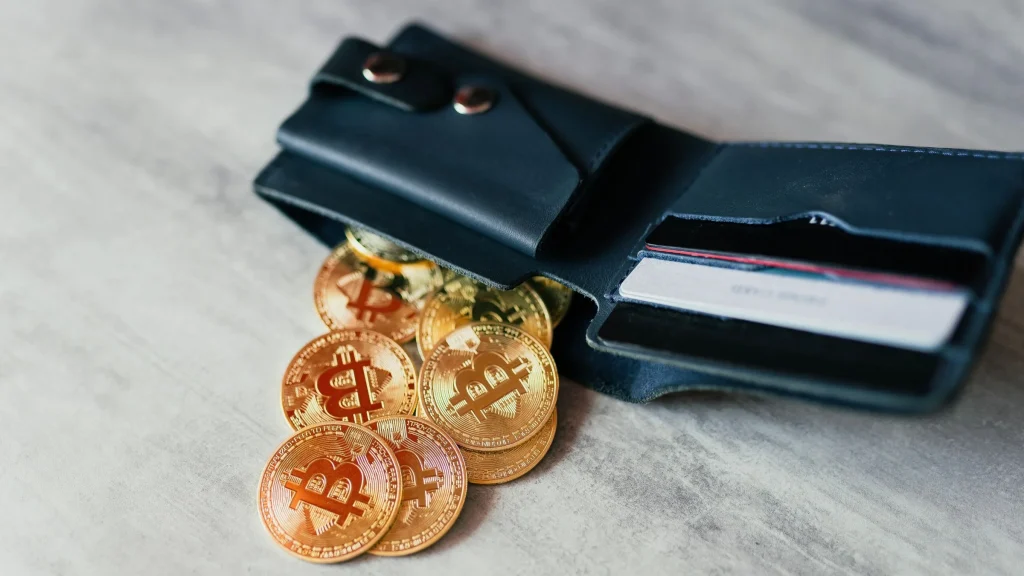
- Software wallets (MetaMask, Trust Wallet, Exodus) store your private keys on your device and offer more security than an exchange, though they remain internet-connected.
- Hardware wallets (Ledger, Trezor) store keys entirely offline and are essentially immune to remote hacking.
Common Mistakes to Avoid When Buying Crypto
Understanding the common pitfalls that new investors face is crucial. By familiarizing yourself with these mistakes before diving in, you can significantly reduce your chances of loss.
Investing More Than You Can Afford to Lose
Crypto markets are volatile, and even strong long-term assets can drop 50% or more in a matter of weeks. Set a firm limit before you invest your first dollar. This should be an amount you could lose entirely without affecting your financial stability.
Buying Based on Social Media Hype
If a coin is trending on Reddit, X, or TikTok, the early investors are likely already looking to sell. Buying into hype almost always means buying at the peak, right before a sharp correction. Do your own research and make decisions based on facts, not hype.
Neglecting Account Security
Weak passwords, skipping two-factor authentication, and clicking phishing links can all lead to an instant and permanent loss. No exchange or wallet provider can reverse a theft. Treat your account security with the same seriousness you would your bank account.
Panic-Selling During Market Dips
Volatility is a feature of crypto markets, not an anomaly. Selling in a panic during a downturn locks in losses that patient, long-term holders frequently recover. Have a strategy before the dips happen so emotion doesn’t drive your decisions.
Sending Crypto to the Wrong Address
Blockchain transactions are irreversible. A single error in an address means your funds are gone forever. Always verify addresses character by character, and on large transfers, send a small test amount first.
Falling for Scams
Scams are among the most common pitfalls for people learning how to buy crypto. Never trust anyone who guarantees returns, asks you to send crypto to receive more back, or pressures you to act quickly.
Taxes and Legal Responsibilities
The IRS treats cryptocurrency as property, not currency. Every time you sell crypto, trade one coin for another, or spend crypto on goods and services, you trigger a taxable event.
Gains held longer than one year qualify for the lower long-term capital gains rate; gains on holdings of one year or less are taxed as ordinary income. Losses can offset gains elsewhere in your portfolio, with up to $3,000 deductible against ordinary income annually.
| Taxable Events | Non-Taxable Events |
|---|---|
| Selling crypto for fiat (USD) | Buying crypto with USD and holding |
| Trading one crypto for another | Transferring between your own wallets |
| Spending crypto on goods or services | Receiving crypto as a gift (below IRS threshold) |
| Receiving crypto as payment or income | Moving crypto to cold storage |
Transferring money between wallets you own or purchasing and holding cryptocurrency are not taxable events. However, you need to keep track of the date, amount, price, and fees associated with each purchase from the very beginning.
Cryptocurrency tax platforms such as Koinly, CoinTracker, and TaxBit link to your exchange accounts, compute your profits and losses automatically, and produce the necessary IRS forms. Rebuilding a history months later is much more difficult than keeping it up to date in real time, so set this up from the very first transaction.
Disclaimer
The content on this page is for informational purposes only and does not constitute financial, investment, or legal advice. Cryptocurrency investments carry risk, including the possible loss of principal. Always do your own research and consult a qualified professional before making financial decisions.