

Image Credit: Shutterstock
Key Takeaways
- HYPE hit an all-time high above $75 as three U.S. spot ETFs launched within a month, pulling in over $136 million in combined net inflows.
- The protocol directs more than 97% of revenue toward open-market HYPE buybacks, a loop that strengthens as trading volume grows.
- Roughly 61% of supply is locked until 2028, leaving every new source of demand hitting a thinner order book than the market cap suggests.
HYPE touched an all-time high above $75 this week while Bitcoin and most major tokens lost ground. Three forces are driving the divergence: a rapid-fire wave of U.S. ETF launches, a protocol buyback mechanism that scales with trading volume, and a supply schedule that keeps 61% of tokens locked until 2028.
Three ETFs in Three Weeks Changed Who Is Buying HYPE
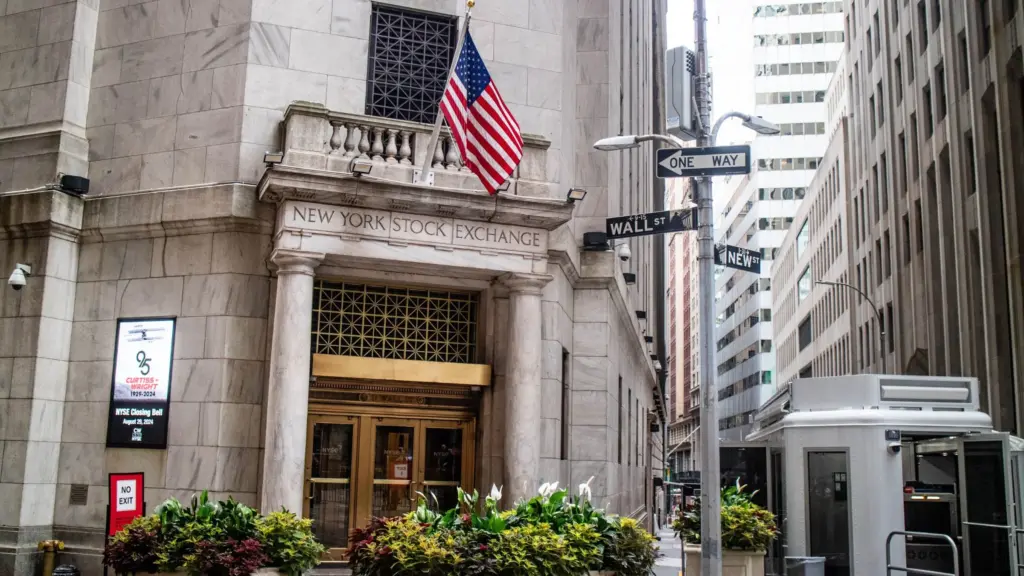
The most visible catalyst is institutional access. Within a single month, three U.S. spot HYPE exchange-traded funds have come to the market. 21Shares launched THYP on Nasdaq on May 12. Bitwise followed with BHYP on NYSE on May 15. Grayscale’s Hyperliquid Staking ETF, trading under the ticker HYPG, began trading on June 3 with a 0.29% sponsor fee, the lowest of the three.
Combined net inflows across THYP and BHYP exceeded $136 million and generated nearly $600 million in trading volume within their first three weeks. Grayscale’s entry adds another staking-enabled product with the lowest sponsor fee of the three, which could pull additional institutional demand.
The ETF launches coincided with HYPE flipping Dogecoin in market capitalization and entering the top 10. SEC disclosures also revealed that public companies including Hyperliquid Strategies Inc., which controls more than $689 million in HYPE on its balance sheet, have made dedicated treasury allocations to the token.
A Buyback Machine That Gets Stronger as Volume Grows
Hyperliquid’s protocol directs more than 97% of its revenue toward buying HYPE from the open market. As trading activity increases, so do the buybacks. Rising volume generates more revenue, which can fund more buybacks and add demand for HYPE. That can support price momentum when broader market conditions remain favorable.
The numbers behind that loop are substantial. Hyperliquid captured a record 6.63% share of global perpetual futures volume in May. HIP-3 builder-deployed perpetual contracts generated more than $62 billion in monthly trading activity. The platform’s trading volume relative to Binance also hit a record during the month.
DeFiLlama data shows total value locked on Hyperliquid climbing to approximately $5.9 billion, reinforcing that the network is attracting real capital alongside speculative positioning.
61% of Supply Is Locked Until 2028
Supply conditions are tight. Roughly 61% of HYPE’s total supply is locked until 2028. Circulating supply sits at about 253.6 million tokens out of a maximum of 961.7 million. With locked allocations, ETF holdings, and staked tokens each reducing liquid supply in different ways, every new source of demand is hitting a thinner order book than the headline market capitalization would suggest.
The combination of ETF buying, protocol buybacks, and constrained float has already produced visible market effects. A prominent whale known as Loracle closed an entire $110 million short position at a realized loss of roughly $46.5 million this week and flipped to a leveraged long. That kind of forced capitulation from a major bear tends to accelerate momentum in thin markets.
The Technical Case for $105
HYPE remains above its 20-day, 50-day, 100-day, and 200-day exponential moving averages. The 20-day EMA sits near $62, and the 50-day is around $53, leaving considerable distance between price and the trend indicators.
The token broke above a multi-week bull pennant pattern, with the measured move projecting a target of roughly $105. Fibonacci extensions from the January low near $20.50 place the 1.618 level at approximately $110. Analyst Ali Martinez has flagged $97 and $163 as the next upside targets now that prior sell signals have been invalidated. Arthur Hayes has said he believes HYPE could reach $150 by August.
The daily RSI sits near 70, a level consistent with strong momentum but also with the risk of short-term cooling after a rapid advance. On-balance volume continues rising alongside price, suggesting the rally is backed by demand rather than thin liquidity.
What Could Break the Thesis
The $72 to $75 zone is the key level. It acted as resistance before the breakout and is now being tested as support. If buyers defend it, the bull pennant target near $105 remains in play. A sustained break below $72 would expose $64 as the next support area, corresponding to the 0.786 Fibonacci retracement.
The structural case rests on three assumptions: ETF inflows continue, protocol revenue stays high enough to fund meaningful buybacks, and locked supply remains locked. If any of those inputs weaken, the thin float that amplified the rally on the way up works just as hard on the way down. The 61% supply lock holds until 2028, but ETF flows and trading volume can reverse quickly.
For now, the three drivers are intact. The rally is stretched on momentum indicators, but the market structure underneath it has not broken.