

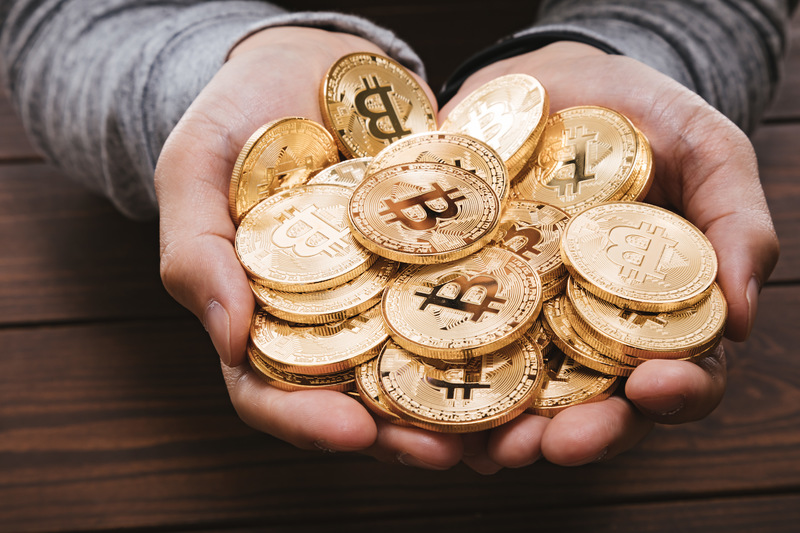
Key Takeaways:
- Bitcoin Offers High Reward: Bitcoin (BTC) has delivered extraordinary long-term returns, with past gains turning modest investments into hundreds of thousands or even billions.
- Institutional Adoption Is Fueling 2025 Optimism: The launch of US spot Bitcoin ETFs, increasing interest from firms like Fidelity, and price forecasts ranging from $80,000 to $185,000 highlight growing institutional confidence in Bitcoin’s future as a legitimate asset class.
- A Small Allocation Can Improve Portfolio Diversification: Bitcoin’s low correlation with traditional assets like stocks and bonds can enhance portfolio performance when used strategically. Experts recommend a 1–5% allocation to balance potential upside with risk control.
In 2025, Bitcoin (BTC) continues to spark heated debate among investors, financial institutions, and everyday traders. After over a decade of exponential gains, dramatic crashes, and increasing institutional adoption, one question persists: Is Bitcoin (BTC) still a good investment today?
What Is Bitcoin?
Bitcoin (BTC) is a decentralised digital currency launched in 2009 by an anonymous creator under Satoshi Nakamoto’s pseudonym. Unlike traditional currencies governments issue, Bitcoin (BTC) is not controlled by any central authority. It operates on a distributed ledger technology known as blockchain, which records transactions transparently and immutably.
Bitcoin (BTC) has a fixed maximum supply of 21 million coins, a design that contributes to its scarcity. It is often called “digital gold” due to its store-of-value characteristics. Transactions are verified by a global network of participants called miners, and Bitcoin (BTC) can be stored in digital wallets or traded on crypto exchanges.
How Does Bitcoin Work?
Bitcoin’s blockchain is maintained through mining, where powerful computers solve cryptographic puzzles to validate transactions. In return, miners earn Bitcoin (BTC) as a reward, which halves roughly every four years in an event known as the Bitcoin (BTC) halving.
The most recent halving occurred in April 2024, reducing the reward from 6.25 BTC to 3.125 BTC per block. This mechanism slows Bitcoin’s inflation rate, increasing its scarcity over time—a key factor in its long-term value proposition.
Bitcoin’s underlying infrastructure has also evolved, with the introduction of the Lightning Network to improve scalability and reduce transaction costs.
Historical Performance & Case Studies
2010–2025 Returns
Bitcoin’s early performance is legendary. If you had invested $10,000 in 2010, when Bitcoin trading was at a few cents, your holdings would be worth over $6.25 billion at a 2025 price of $50,000 per Bitcoin (BTC).
A $1,000 investment in 2015 would have grown to approximately $421,283 by 2025. These cases demonstrate Bitcoin’s potential for outsized returns—but they also highlight a reality: most of those gains are in the past.
Volatility & Market Cycles
Bitcoin (BTC) is famous—and infamous—for its volatility. Price cycles often follow four-year halving events. For instance:
- In 2017, Bitcoin (BTC) surged to ~$20,000 before crashing to ~$3,000 in 2018.
- In 2021, it reached nearly $69,000, only to fall below $20,000 in 2022.
- By 2025, analysts project a range between $80,000 and $185,000.
These sharp swings underscore the opportunities and dangers of Bitcoin Investing.
Benefits of Investing in Bitcoin
Despite its volatility, Bitcoin (BTC) offers several compelling benefits for long-term investors—especially in today’s macroeconomic environment marked by inflation concerns, monetary debasement, and growing institutional demand.
Potential High Returns
Bitcoin’s appeal lies in its historical track record of exponential returns. While early adopters reaped extraordinary gains, recent investors have also seen impressive upside during bull markets.
- Bitcoin (BTC) has outperformed virtually every major asset class in the last decade, including the S&P 500, gold, and bonds.
- From 2015 to 2025, Bitcoin (BTC) grew over 42,000%, turning a $1,000 investment into more than $421,000.
While past performance doesn’t guarantee future results, many investors are drawn to Bitcoin (BTC) for its asymmetric return profile—the idea that potential upside may far exceed downside for those with high risk tolerance.
Digital Gold & Inflation Hedge
Bitcoin (BTC) is often called digital gold because of its limited supply (capped at 21 million coins) and resistance to inflation. Unlike fiat currencies that can be printed in unlimited quantities, BTC’s supply schedule is predictable and fixed.
In periods of high inflation or economic instability, some investors turn to Bitcoin (BTC) as a hedge against currency devaluation, similar to how gold has historically functioned. As fiat purchasing power erodes, BTC’s scarcity becomes a major draw.
Major institutions like Fidelity and analysts like Galaxy Research support Bitcoin’s role as a long-term store of value.
Diversification Benefits
Adding Bitcoin (BTC) to a traditional portfolio of stocks and bonds can enhance diversification due to its low correlation with mainstream financial markets.
- When markets experience stress, Bitcoin (BTC) often behaves differently from equities or fixed income instruments.
- This makes it a valuable non-correlated asset to improve risk-adjusted returns.
Modern portfolio theory suggests that a small allocation—typically 1% to 5%—to high-risk assets like Bitcoin (BTC) can enhance long-term performance without drastically increasing risk.
Risks & Disadvantages
While Bitcoin (BTC) holds strong appeal, it comes with serious risks that investors must understand before committing capital. Its potential for high reward is inseparable from the possibility of steep losses.
Price Volatility
Bitcoin’s extreme volatility is one of its defining and primary drawbacks.
- Price swings of 10–20% in a single day are common.
- For example, Bitcoin (BTC) fell from $69,000 in late 2021 to below $17,000 in 2022, wiping out billions in market value.
This level of fluctuation makes Bitcoin (BTC) unsuitable for risk-averse investors or those with short investment horizons. While volatility creates profit opportunities, it increases emotional decision-making and portfolio instability.
Regulatory & Security Risks
Bitcoin (BTC) operates in a rapidly evolving regulatory environment. Governments worldwide continue to shape crypto taxation, usage, and exchange compliance policies.
- The SEC has intensified scrutiny over crypto platforms and tokens in the US.
- Regulatory crackdowns—such as potential bans, harsh taxation, or usage limits—can significantly affect prices.
Security is another concern. While the Bitcoin network is secure, exchanges and wallets have been hacked, leading to millions in lost or stolen funds. For instance, high-profile breaches like Mt. Gox and FTX have eroded investor trust.
Scalability & Environmental Concerns
Bitcoin’s design limits scalability compared to centralised systems like Visa or Mastercard. Although the Lightning Network improves transaction speed and cost, mass adoption still presents challenges.
Additionally, Bitcoin (BTC) mining consumes significant energy, leading to criticism over its environmental impact. Although miners increasingly shift to renewable sources, sustainability remains a sticking point, especially among ESG-focused investors and regulators.
Is Bitcoin Right for Your Portfolio?
Bitcoin (BTC) may not be for everyone. Its high volatility, regulatory uncertainty, and speculative nature mean it suits only specific investor profiles. Before diving in, understanding your risk tolerance, investment goals, and portfolio structure is essential.
Risk Profile & Allocation Guidelines
Bitcoin (BTC) is best suited for investors with high risk tolerance, long time horizons, and the ability to weather sharp drawdowns. Financial advisors often recommend limiting allocation to 1%–5% of a diversified portfolio.
- Conservative investors might consider a 1% allocation as a hedge or growth enhancer.
- More aggressive investors with higher conviction could go up to 5%–10%, but this comes with elevated risk.
This position sizing helps balance potential upside with capital preservation, ensuring that a Bitcoin (BTC) investment doesn’t dominate overall performance positively or negatively.
Comparison to Other Asset Classes
When compared to traditional investments, Bitcoin (BTC) offers a unique combination of risk and reward:
| Asset Class | Volatility | Liquidity | Historical Return | Correlation with BTC |
| Stocks | Moderate | High | \~7-10%/year | Low to moderate |
| Bonds | Low | High | \~2-5%/year | Negative to low |
| Gold | Low | High | \~1-2%/year | Low |
| Bitcoin | High | High | \~200%+/year (long term) | Very low |
Despite the higher risk, Bitcoin (BTC) stands apart for its non-correlation with most assets, making it a compelling diversification tool. As global macroeconomic conditions evolve, some investors see Bitcoin (BTC) as a hedge against fiat currency debasement, akin to gold—but with far greater upside potential.
Expert Predictions & 2025 Outlook
As we move deeper into 2025, Bitcoin (BTC) is again the subject of bold predictions. While some analysts expect new all-time highs, others urge caution amid regulatory tightening and macro uncertainty.

Price Forecasts – $80K to $185K Range
Market forecasts for BTC’s 2025 performance range from conservative to wildly bullish:
- Changelly projects Bitcoin (BTC) to reach around $121,094.99 by June 2025 — an 18.58% increase from early 2024 levels.
- InvestingHaven gives a broader range of $80,440 to $151,200, with an extended stretch target of $185,000 under optimal conditions.
- Galaxy Research supports the bullish case, citing nation-state and institutional adoption as key catalysts for price growth.
“A combination of institutional, corporate, and nation-state adoption will propel Bitcoin to new heights in 2025.” — Alex Thorn, Galaxy Research.
Still, it’s important to note that BTC’s path is far from guaranteed. Bearish scenarios include a dip to $80,000 or lower, especially if regulatory headwinds intensify or risk-off sentiment returns globally.
Institutional Adoption & ETFs – AUM Projections
Institutional interest in Bitcoin (BTC) has surged, thanks to the approval of US-based spot Bitcoin ETF in early 2024. These regulated investment vehicles allow traditional investors to gain exposure to Bitcoin (BTC) without holding the asset directly.
- Galaxy Research estimates that Bitcoin ETPs (Exchange-Traded Products) could surpass $250 billion in assets under management (AUM) by the end of 2025.
- Major players like Fidelity and BlackRock are heavily involved, signalling that Bitcoin (BTC) is becoming more entrenched in the financial system.
This influx of institutional capital boosts price stability and legitimacy and increases the odds of long-term mainstream adoption.
How to Invest in Bitcoin
Investing in Bitcoin (BTC) has never been easier, thanks to a growing number of platforms, tools, and regulated products. Here’s how to get started safely and efficiently.
Choose a Reputable Exchange
To buy Bitcoin (BTC), you must register with a crypto exchange. Look for platforms that offer:
- Regulatory compliance (e.g., registered with local authorities)
- Strong security protocols (2FA, cold storage, insurance)
- Transparent fees and liquidity
For global users, the top exchanges in 2025 include Coinbase, Kraken, Binance, and Gemini. For institutional investors or those in the US, Fidelity’s crypto division and Bitcoin ETFs offer additional access points.
Use a Secure Wallet


Once purchased, your Bitcoin (BTC) can be stored in two main types of wallets:
- Hot wallets: Connected to the internet (e.g., mobile or desktop apps like MetaMask or Trust Wallet). Convenient but more vulnerable to hacks.
- Cold wallets: Offline hardware devices (e.g., Ledger, Trezor) offering better long-term security.
Cold storage is strongly recommended for long-term investors to protect against cyber theft.
Invest Fractionally
You don’t need to buy an entire Bitcoin (BTC) (worth ~$120,000+ in 2025). Bitcoin (BTC) is divisible into satoshis (1 BTC = 100 million sats), allowing you to invest as little as $10 or $100.
This opens the door for everyday investors to build exposure gradually via:
- Dollar-cost averaging (DCA) strategies
- Recurring purchases through exchanges or apps like Swan Bitcoin
Consider ETFs and Retirement Accounts
For investors seeking exposure without holding cryptocurrency directly, Bitcoin ETFs are a popular 2025 option. These can be added to:
- Brokerage portfolios
- IRAs and retirement accounts
- Tax-advantaged investment vehicles
This makes Bitcoin (BTC) more accessible to traditional investors and financial advisors looking for compliant ways to diversify client portfolios.
FAQs
Yes, for investors with a high risk tolerance and long-term vision, Bitcoin (BT) still offers potential upside. While gains may be more modest than in the past, analysts predict Bitcoin (BTC) could reach between $80,000 and $185,000 in 2025. However, due diligence and diversification remain essential.
If you invested $1,000 in Bitcoin (BTC) in 2015, you'd have approximately $421,283 in 2025, assuming a Bitcoin (BTC) price of ~$50,000. This highlights Bitcoin's historic performance — though such explosive growth is unlikely to repeat.
Depending on market conditions, you earn a 50% to 300% return or lose part of your capital. A $100 investment could grow to $150–$400 based on 2025 forecasts, but outcomes vary greatly due to volatility and market sentiment.
Some analysts forecast that Bitcoin (BTC) could hit $500,000 to $1 million by 2030, driven by supply scarcity, institutional adoption, and broader acceptance. However, these long-term predictions are highly speculative and depend on regulation, tech development, and macroeconomics.
Changelly projects Bitcoin (BTC) to reach $121,094.99 by mid-2025, reflecting an 18.58% increase from early 2024. Other projections range from $80,000 to $185,000, depending on investor sentiment and adoption trends.
If you bought $10,000 worth of Bitcoin (BTC) in 2010 and held it through 2025, your holdings could be worth over $6.25 billion, assuming a (BTC) price of $50,000. This shows the impact of early adoption and how much timing matters.
Is it worth investing in Bitcoin anymore in 2025?
How much is $1,000 in Bitcoin from 10 years ago worth today?
How much will I make if I invest $100 in Bitcoin in 2025?
How much will 1 Bitcoin be worth in 2030?
Where will Bitcoin be in 5 years (by mid-2025)?
How much would I have if I invested $10,000 in Bitcoin in 2010?
Conclusion & Next Steps
So, is Bitcoin (BTC) a good investment in 2025? The answer depends on your financial goals, risk appetite, and investment timeline. Bitcoin (BTC) remains a high-risk, high-reward asset. It has delivered extraordinary returns and continues attracting attention from institutional investors, hedge funds, and governments.
In 2025, projections place Bitcoin (BTC) anywhere from $80,000 to $185,000, with institutional ETF adoption and the 2024 halving acting as bullish catalysts. However, risks persist: extreme volatility, regulatory uncertainty, and scalability challenges mean Bitcoin (BTC) isn’t for everyone. It’s not a get-rich-quick scheme, but it can serve as a strategic diversifier in a well-balanced portfolio—especially at an allocation of 1% to 5%.
Next Steps:
- Evaluate your risk tolerance — Are you prepared to weather 50% drawdowns?
- Diversify smartly — Consider Bitcoin (BTC) as a satellite holding, not a core asset.
- Choose a secure exchange — Use regulated platforms like Coinbase, Kraken, or ETFs.
- Store your assets safely — Opt for cold wallets if holding long-term.
- Stay informed — Follow updates from the SEC, Galaxy Research, and credible sources like Bankrate and NerdWallet.
Whether you’re a seasoned investor or just entering the crypto space, Bitcoin (BTC) offers unique opportunities in 2025 — but demands careful consideration.