

Image credit: Shutterstock
Key Takeaways
- The US and UK Treasuries released a 10-point roadmap coordinating stablecoin and tokenization oversight, introducing no new binding regulations.
- The stablecoin-specific statement calls for full 1:1 backing, clear redemption rights, and strong custody standards, without creating mutual recognition between the two countries’ rules.
- Dollar-pegged stablecoins dominate the market at roughly 84% share, as the roadmap aims to support a broader “multi-money” ecosystem.
The U.S. Department of the Treasury and the UK’s HM Treasury released a joint 10-point roadmap on July 14 aimed at coordinating oversight of stablecoins and tokenized assets across both countries. The recommendations come from the Transatlantic Taskforce for Markets of the Future, a body the two governments established in September 2025.
A Coordination Framework, Not New Rules
The taskforce was announced jointly by then-Treasury Secretary Scott Bessent and UK Chancellor of the Exchequer Rachel Reeves during a U.S. presidential state visit to the UK. Its stated goal is to reduce regulatory fragmentation that officials say has pushed digital asset innovation into jurisdictions with weaker oversight.
The roadmap explicitly introduces no new binding regulations. Instead, it identifies areas where regulators in both countries plan to work more closely together, including common approaches to settling tokenized securities and whether stablecoins or tokenized money market funds could serve as collateral at clearinghouses. The two governments said in the joint statement:
“The United States and the UK should leverage their positions as leading global financial centers to actively shape the development of digital asset markets and next-generation financial infrastructure.”
Separately from the roadmap, the two Treasuries also issued a joint statement on stablecoins specifically, describing them as an important innovation in digital money and pledging support for their use in cross-border payments, settlement and capital markets.
Which Regulators Are Involved
The roadmap calls on the Bank of England and the UK’s Financial Conduct Authority, alongside the U.S. Securities and Exchange Commission and Commodity Futures Trading Commission, to develop common approaches to tokenized asset regulation. It also directs the SEC and FCA specifically to explore ways to ease cross-border capital raising.
As part of the plan, the two governments will establish an industry-led working group on a one-year basis to run cross-border tokenization pilot projects, with UK and U.S. officials still determining the group’s exact structure. The roadmap also calls for a review of global banking standards for cryptoassets through the Basel Committee on Banking Supervision, aiming to make those standards technology-neutral rather than tied to specific token designs.
Stablecoin Principles: Full Backing And Clear Redemption Rights
The stablecoin-specific statement sets out shared principles rather than binding requirements. It says stablecoins marketed as money should be backed one to one by cash and high-quality liquid assets, and that issuers should maintain clear redemption rights and strong custody standards. It also states that stablecoin holders should have defined legal claims over reserve assets if an issuer becomes insolvent.
The two governments said they intend to pursue “comparable outcomes for comparable risks” rather than identical rules. They also said they would examine formal mechanisms that could eventually let a stablecoin issued in one country access the other’s market, subject to each jurisdiction’s own laws. The statement does not create automatic mutual recognition of either country’s stablecoin rules.
GENIUS Act Implementation Nears A Deadline
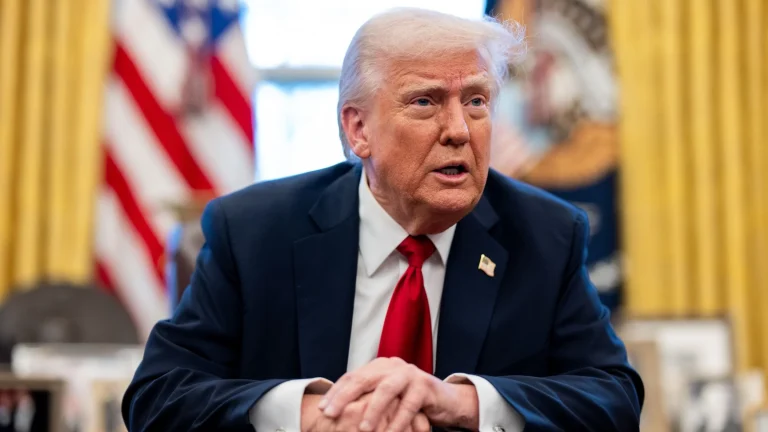
The roadmap’s U.S. stablecoin principles build directly on the Guiding and Establishing National Innovation for U.S. Stablecoins Act, which President Trump signed into law on July 18, 2025, one year before the roadmap’s release. The law requires full reserve backing for payment stablecoins, mandates annual audits for issuers with a market capitalization above $50 billion, and sets rules for foreign stablecoin issuance in the U.S. market.
During a House Financial Services Committee hearing this week, Federal Reserve Chair Kevin Warsh was asked about the central bank’s progress on proposed implementation rules and whether regulators would meet a July 18 rulemaking deadline tied to the law. Federal agencies are continuing to work on those proposals, and the roadmap’s release raises the question of whether the U.S. can finalize its domestic framework on the same timeline it is now coordinating internationally.
Dollar Stablecoins Still Dominate The Market
The roadmap arrives as dollar-pegged stablecoins remain overwhelmingly dominant globally. Tether’s USDT and Circle’s USDC together account for roughly 84% of the stablecoin market, with combined circulation near $257 billion, compared with a largest sterling-pegged stablecoin circulating at only about $34 million. That imbalance underscores one of the roadmap’s stated goals: supporting a “multi-money” ecosystem in which stablecoins, tokenized bank deposits and other digital payment forms can coexist across both markets rather than consolidating around a single currency or issuer.