
Ukraine Strikes on Russian Oil Tighten Supply and Weigh on Bitcoin

Angelina Reinhard
- 2 min read
Key Takeaways
- Ukraine strikes hit key Russian Baltic export hubs, tightening an oil market already strained by the Iran war
- Crude stayed elevated near $110 Brent, keeping inflation fears and a hawkish Fed tone in focus
- Bitcoin held its range but traded closer to support around $66,000 as macro pressure built
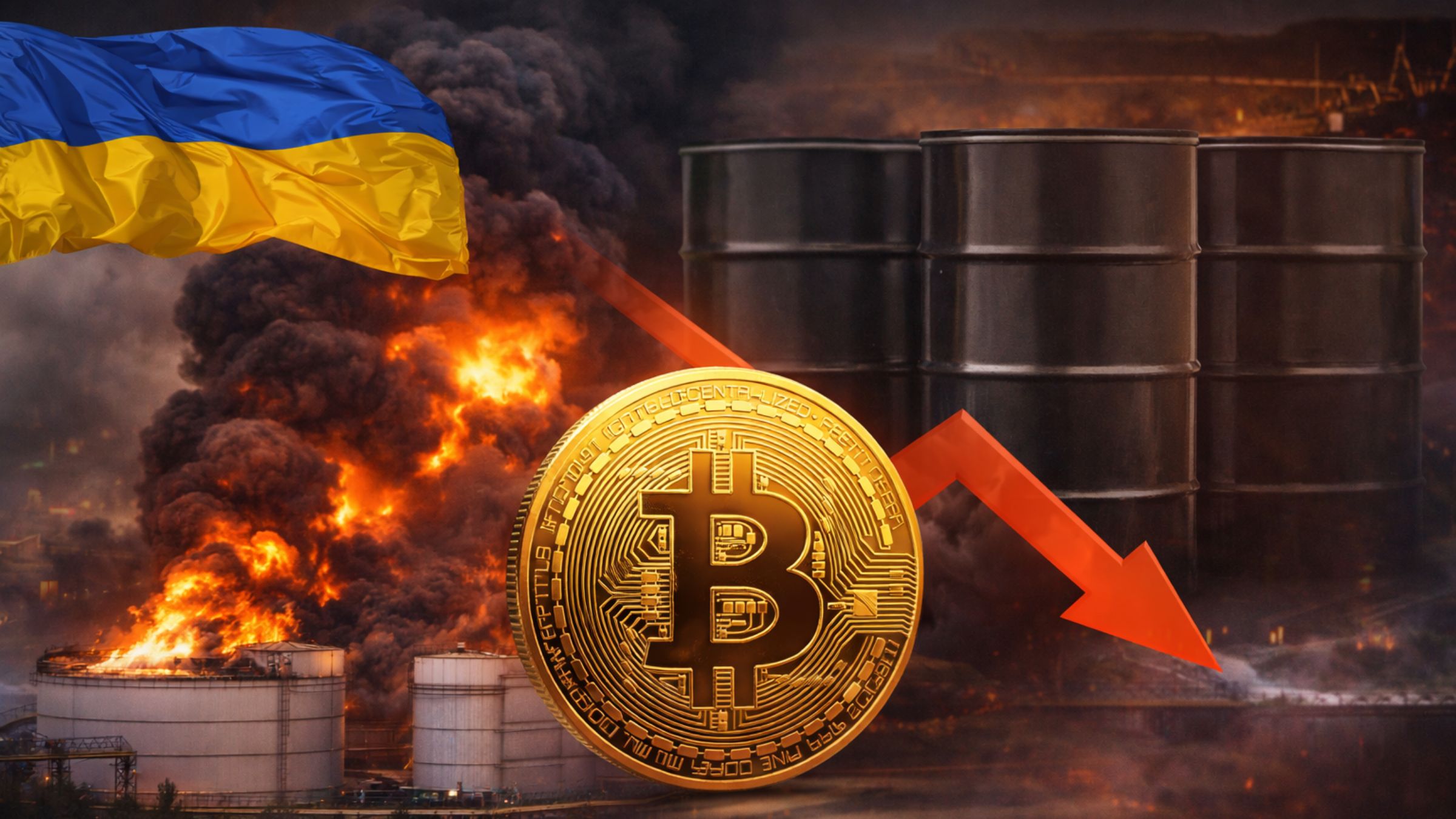
Ukraine’s latest attacks on Russian oil infrastructure have added another supply risk to an energy market already strained by the Iran war. The disruption has kept crude elevated, added to inflation concerns, and left Bitcoin trading near the lower half of its recent range.
Ukraine Strikes Disrupt Russian Baltic Oil Exports after U.S. Relief Move
The immediate trigger was Ukraine’s strike campaign against Russian Baltic export hubs, including Primorsk and Ust-Luga. Those attacks came after Washington temporarily eased restrictions on Russian oil flows to help offset supply disruptions tied to the Iran war.
Russian pipeline operator Transneft has been trying to reroute volumes after the attacks. Current reporting says at least 40% of Russia’s oil export capacity has been affected by port damage, tanker disruptions, and related logistics problems.
Russian crude had become part of the short-term supply relief story. Once those flows were disrupted, one of the few near-term buffers in the oil market came under pressure.
Oil Holds Near $110 Brent Despite Trump Extending the Iran Pause
Crude prices remained elevated even after President Donald Trump extended the pause on attacks targeting Iranian energy infrastructure until April 6. Brent was trading near $109.88 on Friday, while WTI held around $96.05.
The broader move in oil has been much larger than the daily pullback suggests. Brent remained about 52% above its pre-war level and WTI about 43% higher, even with both benchmarks heading for their first weekly decline since the conflict began.
That leaves energy prices at levels still high enough to keep markets focused on inflation rather than relief.
Fed Officials Have Turned More Explicitly to Inflation Risk
The oil shock has fed directly into central bank messaging. Federal Reserve Governor Lisa Cook said this week that the balance of risks had shifted toward inflation because of the Iran war, while Governor Michael Barr warned that policymakers needed to stay vigilant against rising inflation expectations.
Markets have responded by pulling back expectations for rate cuts. The change in pricing does not settle the policy path for the rest of the year, but it does show how quickly higher oil has changed the rates conversation.
For Bitcoin, that shift works through liquidity, the dollar, and broader risk appetite. The pressure is indirect, but it is still macro pressure.
Bitcoin Holds the Range but Drifts toward Support Near $66,000
Bitcoin was trading around $66,678 on Friday, after touching an intraday high near $69,789 and a low near $66,349. That keeps it inside the same broad $65,000 to $75,000 range that has defined recent trading, but closer to support than to the top of the band.
The market has held up better than some risk assets during parts of the Iran conflict. Even so, elevated oil and a more hawkish rates backdrop have added pressure near the lower end of the range.
A break lower in crude would ease part of that stress. As long as oil stays high and inflation risk remains in focus, Bitcoin is still trading against a difficult macro backdrop.
Oil-Driven Inflation Risk is now a Key Macro Headwind for Bitcoin
Ukraine’s strikes did not create the energy crisis. They did disrupt part of the supply route that had been helping markets absorb it.
That leaves Bitcoin facing the same macro problem from another angle. Oil, inflation expectations, and monetary-policy pricing are now doing more of the work in this market than crypto-specific headlines.
Categories:
Angelina Reinhard
Crypto Journalist & Market Analyst
Angelina is a crypto journalist and market analyst covering blockchain innovation, digital asset markets, and emerging industry developments. She focuses on clear, structured reporting that breaks down complex topics into accessible insights for a global audience.
Her work explores market movements, technological trends, and the evolving landscape of the cryptocurrency industry through timely, reader-focused news coverage.