

Image Credit: Shutterstock
Key Takeaways
- Trump ordered the Fed to review whether crypto and fintech firms can access master accounts and U.S. payment rails directly.
- The Fed has 120 days to report on expanding access, including to firms involved in digital assets and instant payment networks.
- Banking groups pushed back, arguing the Fed should pause until it assesses the impact on the broader financial system.
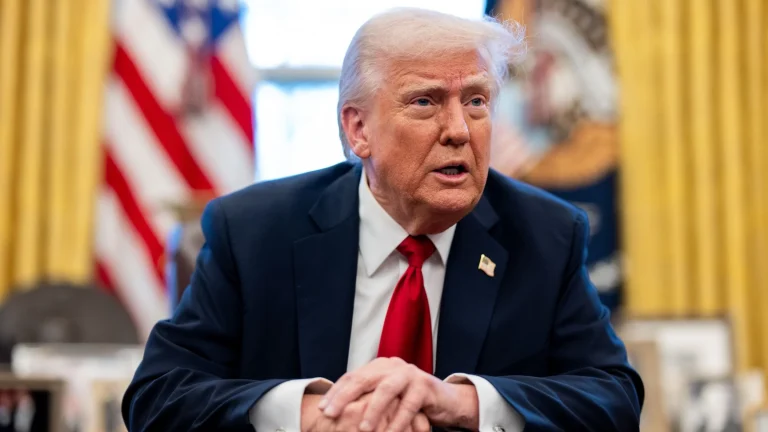
President Trump signed an executive order on Tuesday directing the Federal Reserve and federal financial regulators to review rules that limit fintech and digital asset firms’ access to U.S. payment systems. The order gives regulators 90 days to identify barriers and asks the Fed to report within 120 days on expanding master account access.
Agencies Get 90 Days to Identify Rules Blocking Fintech-Bank Partnerships
The executive order frames fintech integration as U.S. policy.
“The Federal government must update its outdated regulations to allow integration of digital assets and other novel financial technology into traditional financial services and payment systems,” the order states.
Regulators are directed to review existing rules, guidance, supervisory practices, and application processes that affect non-bank companies using technology to offer financial products. Covered activities include payment processing, lending, digital banking, securities and commodities market activity, blockchain-based services, and other digital asset services.
Within three months, agencies must identify rules that “unduly impede fintech firms from entering into partnerships with federally regulated institutions.” Within six months, they are directed to take steps that support innovation based on the review.
Trump Requests Master Accounts from the Fed for Crypto Firms and Non-Banks
A key section asks the Federal Reserve Board of Governors to determine if uninsured depository institutions and non-bank financial companies can use Reserve Bank payment accounts and services. The review specifically includes digital asset, novel financial, and instant payment firms.
The order asks the Fed to assess its legal authority, identify impediments, propose risk controls, and clarify whether the 12 regional Federal Reserve Banks may act independently when approving or denying applications.
When existing law permits access, the Fed is asked to establish transparent procedures and issue determinations on complete applications within 90 days. Master accounts allow holders to move funds directly through the central bank’s payment system, including Fedwire, without relying on intermediary banks.
Kraken Already Has a Limited Account. Others Are in Line.
The order builds on momentum from earlier this year. In March, the Federal Reserve Bank of Kansas City granted Kraken, operating through a Wyoming special purpose depository institution, access to a limited version of a master account. The arrangement gives Kraken access to Fedwire and the ability to hold limited overnight balances but excludes interest on reserves and discount window borrowing.
Ripple, Anchorage Digital, and money transfer company Wise have also sought or publicly discussed Fed master account access. The Fed published a proposal in December for a more formal “skinny” master account framework that would enable restricted access for qualifying firms. Custodia Bank founder Caitlin Long praised the order on X.
“Thank you, @POTUS, for recognizing that there is a continuing problem at the Federal Reserve with blocking legally-eligible institutions from access to the US payment system, which is a public good,” Long wrote.
ICBA Calls for a Pause on Crypto Access to Fed Payment Infrastructure
The Independent Community Bankers of America (ICBA) struck a cautionary note. Chief executive Rebecca Romero Rainey said Federal Reserve officials “must recognize that the Reserve Banks retain discretion under federal law to deny or grant master account access to special-purpose depository institutions, stablecoin issuers and other crypto-related entities.”
Rainey called for a pause on new policies covering stablecoins, Fed master accounts, and OCC national trust charters until regulators assess the combined impact on local communities and the broader economy.
The Bank Policy Institute, which represents major U.S. banks, has previously expressed concern about expanding master account access before the Fed finalizes its policy framework. Representative Maxine Waters has also sought further details on Kraken’s approval, arguing that access to the nation’s payment infrastructure should not be granted without full transparency.