
Bitcoin Rebounds After Trump Claims 78% Trade Deficit Cut

Antony Lewis
- 2 min read
Key Takeaways
- Bitcoin Is Reacting Primarily to Macro Headlines, Not Crypto News
- Tariff Talk Raises “Higher-for-Longer” Interest Rate Fears
- Bitcoin Is Trading Like a High-Beta Macro Asset Again
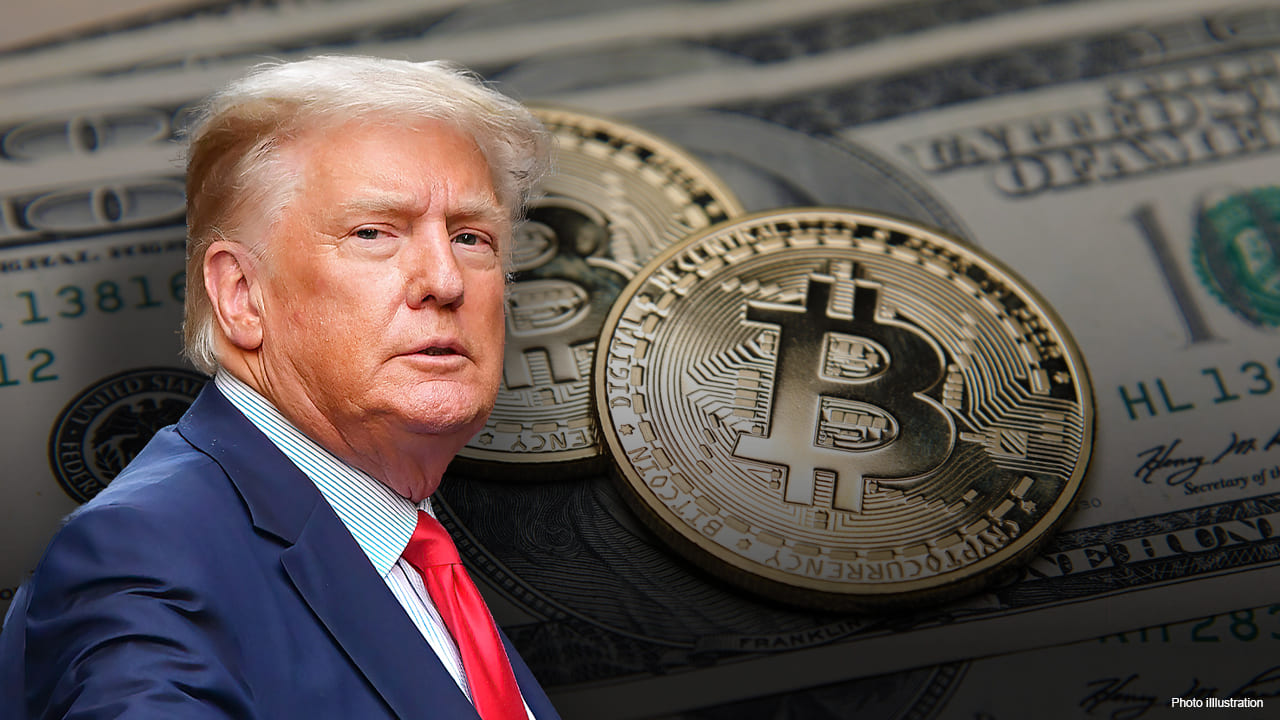
Bitcoin volatility returned Thursday after U.S. President Donald J. Trump said tariffs have reduced the U.S. trade deficit by 78%, adding that the balance could turn positive later this year. The statement quickly rippled through global markets and crypto reacted in real time.
BTC Swings on Macro Headlines
Bitcoin traded between $65,900 and $67,000, recovering from session lows as traders repositioned. The bounce came despite broader market caution, showing that short-term sentiment remains highly reactive to macro-driven narratives rather than crypto-specific developments.
The move underscores a familiar pattern: headline risk is once again dictating intraday volatility, with traders watching political signals as closely as technical charts.
Tariff Rhetoric Revives “Higher-for-Longer” Fears
The bigger issue for markets isn’t whether the 78% trade deficit claim is mathematically accurate, it’s the broader implication of revived tariff policy. Tariffs effectively function as a tax on imports, increasing input costs for businesses and potentially pushing consumer prices higher. If inflationary pressures resurface, the Federal Reserve could face renewed difficulty in justifying rate cuts.
Investors are increasingly sensitive to anything that could delay monetary easing. Even the perception of sticky inflation can shift expectations toward interest rates staying elevated for longer than previously anticipated. That scenario typically strengthens the U.S. dollar, tightens overall financial conditions, and reduces liquidity across risk markets.
For crypto, this macro dynamic matters. When bond yields rise and rate-cut expectations are pushed further out, capital often rotates into safer, yield-generating assets. In that environment, speculative assets like Bitcoin and altcoins tend to lose upside momentum as liquidity becomes more constrained.
In short, tariff headlines may be political in nature, but their impact on rate expectations and dollar strength can quickly translate into real pressure on digital asset prices.
Bitcoin Trading as a Macro Proxy Again
Over the past two weeks, Bitcoin has increasingly traded like a macro-sensitive asset, reacting to shifts in liquidity, bond yields, and dollar strength. The correlation with traditional financial conditions has strengthened, reducing the influence of crypto-native catalysts in the short term.
This shift suggests institutional traders are viewing BTC less as a hedge narrative and more as a high-beta risk asset tied to global liquidity cycles.
Trade Data Adds Nuance
Recent economic data showed the U.S. trade deficit narrowing sharply to around $29.4 billion, the lowest level since 2009. While that supports the broader trade narrative, economists caution that part of the improvement stems from non-monetary gold flows, a factor that can temporarily distort headline figures.
In other words, the structural picture may be less dramatic than political messaging suggests.
If tariff rhetoric strengthens the dollar and tightens financial conditions, Bitcoin rallies could struggle to gain traction above key resistance levels. If the issue fades into political noise, traders may pivot back to watching ETF flows, leverage positioning, and whether BTC can firmly reclaim the $67K–$68K zone.
Categories:
Antony Lewis
Investor And Author
Antony Lewis is a former FX trading software team lead at Credit Suisse who made a bold career shift into the world of cryptocurrency. Captivated by the potential of Bitcoin, he left his role in traditional finance to become the Asia Business Development Director at itBit (now Paxos), a venture capital–funded bitcoin exchange. In 2015, Antony stepped away from itBit to independently study and research blockchain technology in greater depth. His deepening expertise led him to join R3 in 2016 as Director of Research at the Lab & Research Centre in Singapore. At R3, he was responsible for producing research reports and spearheading initiatives around tokenised cash, financial assets, and central bank digital currencies. Antony is also an author having released a book called “The Basics of Bitcoins and Blockchains: An Introduction to Cryptocurrencies and the Technology that Powers Them“.