
Digital Asset Firms Target OCC Custody Charters

Talik Evans
- 2 min read
Key Takeaways
- Eleven firms filed or received conditional OCC trust bank approvals in an 83-day period, highlighting a push to secure federal custody infrastructure.
- Federal charters allow firms to bypass state-by-state licensing and operate under a single national supervisory framework.
- A February 2026 regulatory amendment clarified the scope of trust bank activities, strengthening the legal foundation for crypto-focused applicants.
There was no coordinated announcement. No shared press conference. No industry consortium issuing a joint statement.
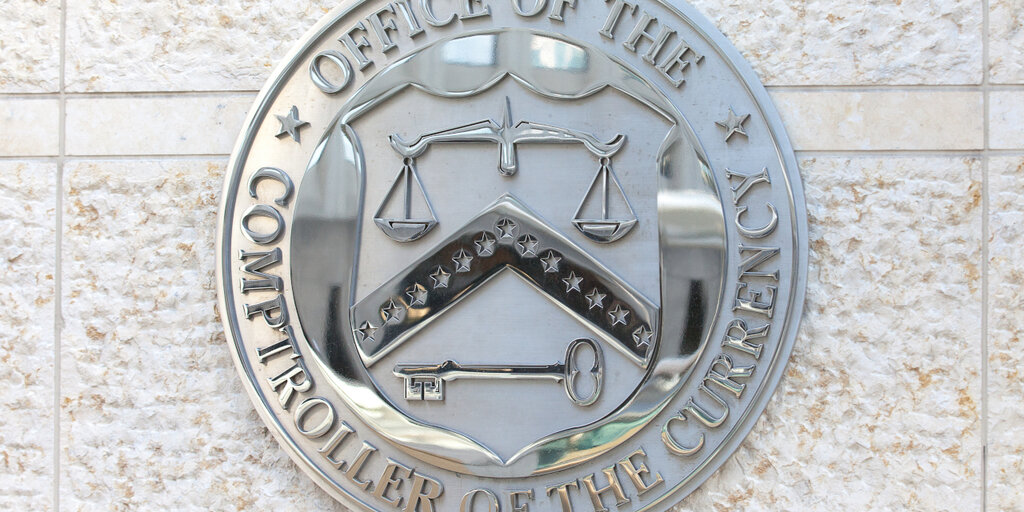
What happened instead was quieter and more consequential: between December 2025 and early March 2026, A growing group of crypto and fintech companies are exploring national trust bank charters from the Office of the Comptroller of the Currency, a move that could reshape who controls the custody and settlement infrastructure underlying digital assets in the United States.
The concentration of applications suggests a shared calculation across firms of widely different sizes and backgrounds: that control of crypto’s custody and settlement infrastructure – not trading, not token issuance – may become the defining competitive battleground of this cycle.
What the Charter Actually Confers
A national trust bank charter does not authorise deposit-taking, checking, or savings accounts, or access to FDIC insurance. Digital asset firms say they want the charters to support services tied to their core products: custody, settlement, payments, and asset management. The critical advantage is federal scope.
Without a federal charter, a firm doing business across the United States must navigate fifty separate state licensing regimes – a process that can stretch across years, with inconsistent rules and no insulation against shifts in state-level political winds. A single OCC charter supersedes those requirements.
The Office of the Comptroller of the Currency currently supervises roughly sixty national trust banks, most of which serve traditional fiduciary or wealth-management roles. The firms now seeking entry represent a significant expansion of the regulator’s footprint into digital asset infrastructure.
The Door That Opened on December 12
On December 12, 2025, the OCC granted conditional approval to five institutions simultaneously: two de novo charters – First National Digital Currency Bank and Ripple National Trust Bank – and the conversion of three state trust companies into uninsured national trust banks under OCC supervision: BitGo Bank & Trust, Fidelity Digital Assets, and Paxos Trust Company.
It was the first set of approvals since 2021, when the OCC conditionally approved Anchorage Digital Bank, Paxos National Trust, and Protego Trust Company. Of those, only Anchorage ultimately satisfied the conditions required to open during the Biden administration.
The December batch signalled that Comptroller Jonathan Gould intended to move differently – and faster. The latest applications were processed in under six months from filing, and the OCC permitted applicants to develop required policies and procedures after conditional approval but before the pre-opening examination, a notable departure from prior practice. February brought three more: Bridge – Stripe’s stablecoin infrastructure subsidiary – approved around February 12; Protego in early February; and Crypto.com on February 23.
Protego’s case carries particular weight. The firm had received a conditional OCC approval in 2021 that lapsed when it failed to meet pre-conversion requirements under the prior administration. The 2026 approval represents a second attempt — this time processed under a regulatory posture that no longer treats crypto charter applications as a problem to be deferred.
The Structural Shift Underneath
The timing of the current wave has an explanation beyond regulatory receptiveness. For years, crypto and fintech firms depended on sponsor bank relationships – licensed commercial banks that held customer funds and provided payment access in exchange for fees and regulatory exposure.
That model began unravelling in 2023 and 2024 as federal scrutiny of third-party banking arrangements tightened and several sponsor banks reduced or exited fintech partnerships entirely, leaving digital asset firms with fewer options and rising costs. A federal trust charter removes that dependency.
Companies gain direct access to infrastructure they previously rented, and the regulatory relationship becomes their own – not a partner’s they cannot fully control.
Comptroller Gould framed the policy rationale plainly:
“New entrants into the federal banking sector are good for consumers, the banking industry, and the economy. They provide access to new products, services, and sources of credit to consumers, and ensure a dynamic, competitive, and diverse banking system.”
The banking lobby disagrees.
The Bank Policy Institute accused digital asset firms applying for trust charters of “not planning to operate genuine trust companies.”
BPI CEO Greg Baer added that the OCC’s December decision “leaves substantial unanswered questions – chiefly, whether the requirements the OCC has outlined for the applicants are appropriately tailored to the activities and risks in which the trust will engage.”
A Regulatory Clarification That Arrives at the Right Moment
On February 27, 2026, the OCC filed an amendment to 12 CFR 5.20, replacing the term “fiduciary activities” with “operations of a trust company and activities related thereto,” aligning the regulatory text with the statutory language in 12 U.S.C. 27(a).
The rule takes effect April 1, 2026. The change is narrow but deliberately timed. A prior reading of the regulatory text could have been used to argue that national trust banks were constrained to fiduciary activities only – a potential legal challenge that, however unlikely to succeed, would have created uncertainty for newly chartered firms in their early months of operation.
The amendment forecloses that argument before the first of the newly approved institutions opens its doors. For the firms still awaiting decisions – Morgan Stanley, Payoneer, Zerohash, Coinbase, and World Liberty Financial – the clarification arrives as confirmation that the infrastructure layer they are racing to occupy now has an unambiguous legal foundation.
The only question that remains is who gets there first.
Categories:
Talik Evans
Journalist and Financial Analyst
Talik Evans is a financial writer and crypto researcher with a growing focus on digital assets, Bitcoin markets, and blockchain innovation. Since 2021, she has been exploring the world of cryptocurrency, writing about everything from exchange comparisons to regulatory updates and security practices.