
Polymarket Bets Ahead of ZachXBT Reveal Raise Insider Trading Questions

Angelina Reinhard
- 2 min read
Key Takeaways
- Wallets piled into Axiom on Polymarket shortly before ZachXBT published, then cleared over $1 million in profit after resolution
- The timing and concentration of bets sparked insider trading concerns as odds moved before the name went public
- Attribution is the hard part since on-chain trades show wallets and timing, while proof would depend on internal logs and cooperation
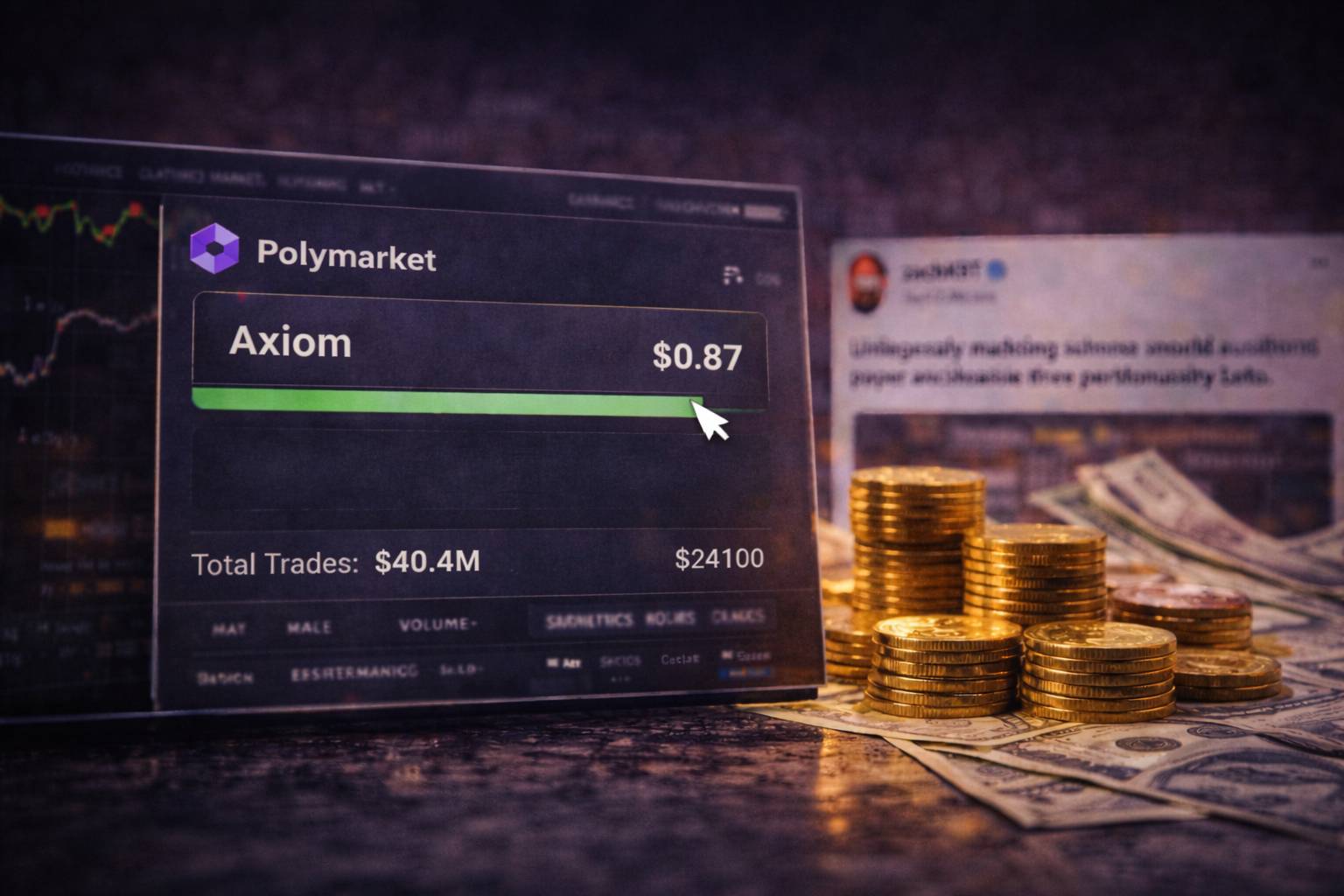
Polymarket trading surged on a contract tied to a ZachXBT reveal, then repriced after his report named Axiom.
On-chain activity shows that a cluster of wallets built heavy Axiom positions shortly before publication, clearing more than $1 million once the market resolved.
The $40 million market surged as traders tried to front-run the reveal
ZachXBT previewed his report days in advance, setting a publication window and describing the target as a major business with multiple employees involved.
Polymarket listed a multi-outcome contract tied to that reveal. Trading swelled as participants rotated between suspects and tried to read social chatter, token flows, and narrative hints.
The contract’s volume accelerated into the final stretch. By the time the report was published, the market had already absorbed enough positioning to make the outcome look pre-decided.
A burst of Axiom buying hit just before the name went public
On-chain review of the contract shows a burst of heavy buying on Axiom shortly before publication, much of it tied to newly created wallets.
In one case, a trader built a position at roughly $0.14 per share and finished with about $411,000 in profit after the contract resolved. Other wallets posted outsized percentage gains on smaller stakes, consistent with buying early before odds repriced.
The timing is the core issue. These positions were not spread evenly across the market. They clustered into a narrow window close to the publication and leaned heavily in one direction.
Allegations focused on internal tools and access to sensitive user data
ZachXBT’s report alleged that Axiom employees used internal tools to look up sensitive user information and track private wallet activity, creating an advantage that outside traders could not match.
The report described weak monitoring and broad access to internal dashboards, including for business development roles. It also included audio and other materials ZachXBT said supported the claims.
Axiom said it revoked access to the tools in question and opened an internal investigation. The company did not publicly address whether any of its staff traded on prediction markets tied to the report.
Why Leaks Are Hard to Prevent Once a Target Is Contacted
ZachXBT said he contacted Axiom for comment and conducted interviews as part of his work. This meant that multiple people could have known the subject and timing before the report went live.
Once a market exists that pays out on the identity of the target, any early knowledge becomes tradable. It does not require a direct leak from a company. It can move through advisers, intermediaries, or anyone else pulled into the reporting process.
The existence of that payout also changes incentives. It turns the period between outreach and publication into a window where information is worth money immediately.
Wallet Transparency Is Not the Same as Accountability
Polymarket’s contracts settle on-chain. Trades are visible. That visibility is what allowed analysts to flag the wallets and estimate the gains. But the same structure makes attribution difficult. Wallets can be new, funded through hops, and controlled by anyone. The ledger can show timing and size, not identity or role.
Polymarket also operates through separate legal entities, with its international platform running outside U.S. derivatives oversight. That adds another layer of complexity if any investigation moves beyond public on-chain review.
Proof Will Depend on Internal Logs and Cooperation
The suspicious trading pattern is visible. The missing piece is the link between wallets and people who have advanced knowledge.
If that link is established, it will come from internal access records, communication trails, and platform cooperation, not from the contract itself.
Categories:
Angelina Reinhard
Crypto Journalist & Market Analyst
Angelina is a crypto journalist and market analyst covering blockchain innovation, digital asset markets, and emerging industry developments. She focuses on clear, structured reporting that breaks down complex topics into accessible insights for a global audience.
Her work explores market movements, technological trends, and the evolving landscape of the cryptocurrency industry through timely, reader-focused news coverage.