
Iran Expands Crypto Use for Oil Trade as Strait of Hormuz Toll Reports Emerge

Angelina Reinhard
- 2 min read

Key Takeaways
- Iran is reportedly charging tankers roughly $1 per barrel in bitcoin and stablecoins to pass through the Strait of Hormuz, run through IRGC-linked networks.
- Chainalysis says the toll fits an established IRGC crypto network with enough liquidity to settle cross-border oil trade without relying on exchanges.
- Dollar-pegged stablecoins have become a core settlement layer for Iranian trade as decades of banking sanctions cut off standard correspondent channels.
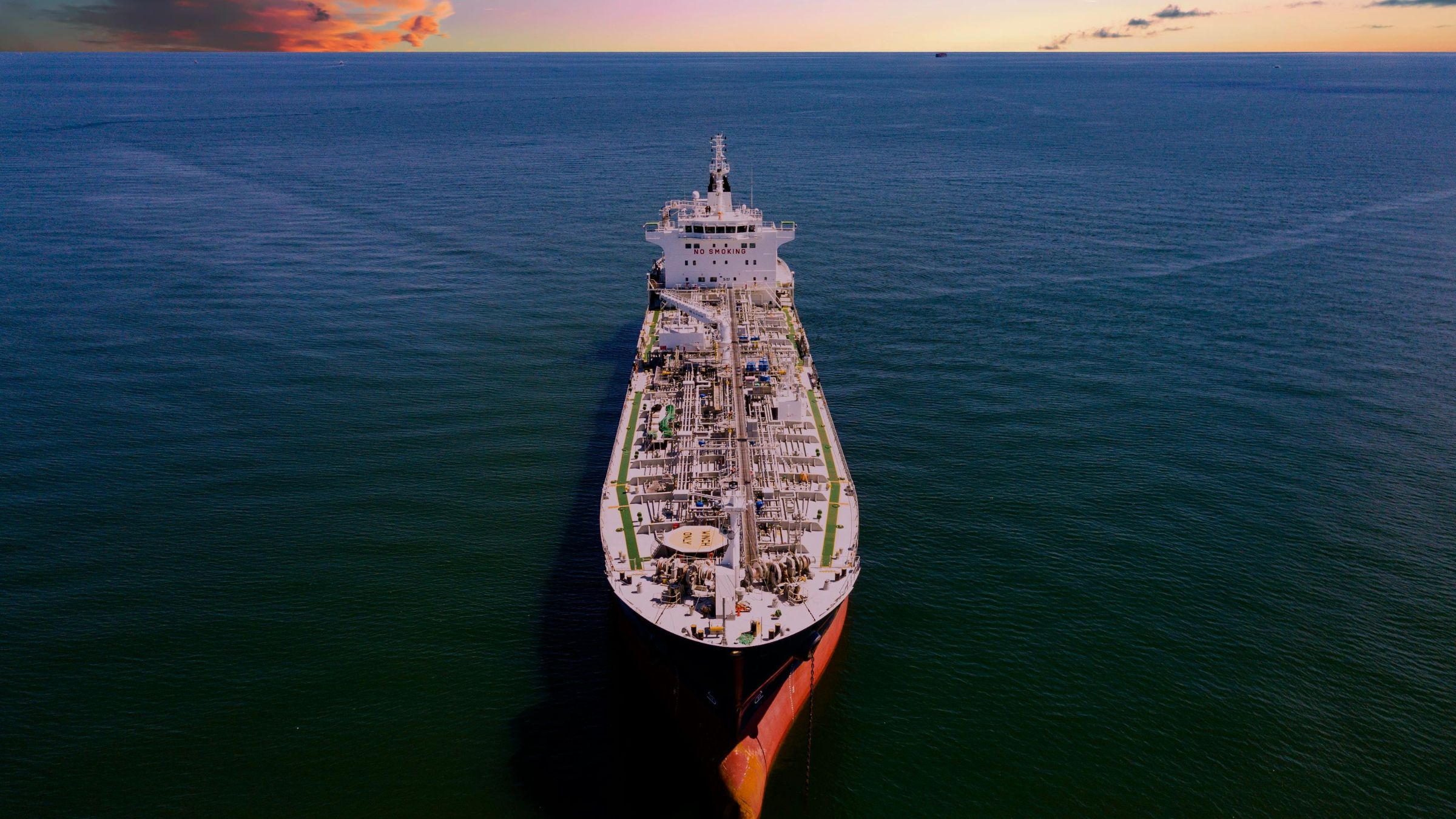
Industry reporting has suggested that Iran may be using cryptocurrency in some cross-border oil transactions, with recent claims indicating that tankers transiting the Strait of Hormuz could be charged tolls in Bitcoin or stablecoins.
No Iranian government agency has publicly confirmed the existence of a cryptocurrency-denominated transit toll at the Strait of Hormuz.
The latest claims involve a reported toll system charging tankers in Bitcoin and dollar-pegged stablecoins to pass through the Strait of Hormuz, though the mechanism has not been confirmed by Iranian authorities.
Industry Reports Describe Possible $1-Per-Barrel Crypto Transit Fees at Hormuz
A spokesperson for Iran’s Oil, Gas, and Petrochemical Products Exporters’ Union was cited in earlier reporting as saying Bitcoin is being accepted as a payment method for tankers passing through the Strait of Hormuz. Separate reporting has suggested that dollar-pegged stablecoins may also have been used to allow a select group of oil tankers to transit unharmed.
Both accounts put the reported fee at around $1 per barrel of oil, with the largest tankers carrying as much as two million barrels. The figure has not been independently verified and was cited in regional media reporting.
The Strait of Hormuz is the narrow sea channel through which, according to the U.S. Energy Information Administration, roughly a fifth of the world’s oil and liquefied natural gas typically passes, making any toll mechanism applied there relevant to global energy flows.
Chainalysis Says Reports Align With Known IRGC Crypto Trade Activity
Blockchain analytics firm Chainalysis said the toll reports are consistent with an expansion it has already tracked in IRGC-linked use of cryptocurrency for cross-border commercial trade, particularly in connection with Iranian oil sales.
“It’s highly unsurprising that this type of trade would be happening via cryptocurrency as well,”
Andrew Fierman, head of national security intelligence at Chainalysis, said, referring to the reported toll paid by ships passing through the Strait.
Fierman said the network is more developed than a handful of reused wallets.
“They have a network of cryptocurrency wallets that the regime is using to facilitate this cross border activity. […] There’s enough liquidity out there that they don’t even need to really use cryptocurrency exchanges either,”
He said.
OFAC Designations Include Crypto Wallets Linked to IRGC and Houthis
The U.S. Treasury’s Office of Foreign Assets Control has designated multiple IRGC- and Houthis-linked actors whose sanctions packages included cryptocurrency addresses. A December 2024 action targeted an IRGC-affiliated financier linked to the Iran-backed Houthis movement in connection with Iranian oil sales to Yemen, with cryptocurrency addresses included in the designation.
In April 2025, OFAC designated a broader Houthi financier network tied to weapons and commodity purchases from Russia, again including digital asset wallets among the identifiers. Chainalysis has described the associated on-chain activity as running into the hundreds of millions of dollars across the two designation cycles, though specific transaction totals were not disclosed in the Treasury announcements.
The Houthis, who control much of northern Yemen, have separately reported no comparable crypto-denominated toll mechanism at the Bab al-Mandeb strait between the Red Sea and the Gulf of Aden. No formal toll regime has been reported there.
Stablecoins Fill a Gap Left by Decades of Banking Sanctions
Iran has been subject to extensive U.S. financial sanctions since 1979, with designations covering almost every bank in the country, and standard correspondent banking channels are largely unavailable. Analysts tracking the sector say that constraint is the central reason dollar-pegged stablecoins have become attractive as a settlement layer for Iranian cross-border trade.
Fierman argued that most of Iran’s trading counterparts are reluctant to settle in Iranian currency.
“Most counterparts don’t want to trade in Rials or in Tomans, especially considering the hyperinflation that is regularly happening in the country as well. […] This ability to get a US dollar-pegged asset creates a mechanism that allows them to trade globally with anyone who’s willing to trade with them, in an alternative mechanism that doesn’t rely on the traditional banking system,” he said.
Tom Keatinge, founding director of the Centre for Finance and Security at UK defence think tank RUSI, said dollar-backed stablecoins are increasingly discussed by analysts as an alternative settlement mechanism.
Keatinge mentioned in an email that although there is a possibility that the use of stablecoins could expose users to Western regulatory intervention, the odds of this would be low.
Categories:
Angelina Reinhard
Crypto Journalist & Market Analyst
Angelina is a crypto journalist and market analyst covering blockchain innovation, digital asset markets, and emerging industry developments. She focuses on clear, structured reporting that breaks down complex topics into accessible insights for a global audience.
Her work explores market movements, technological trends, and the evolving landscape of the cryptocurrency industry through timely, reader-focused news coverage.