
SEC, CFTC Sign Pact to Coordinate Crypto Oversight

Talik Evans
- 2 min read
Key Takeaways
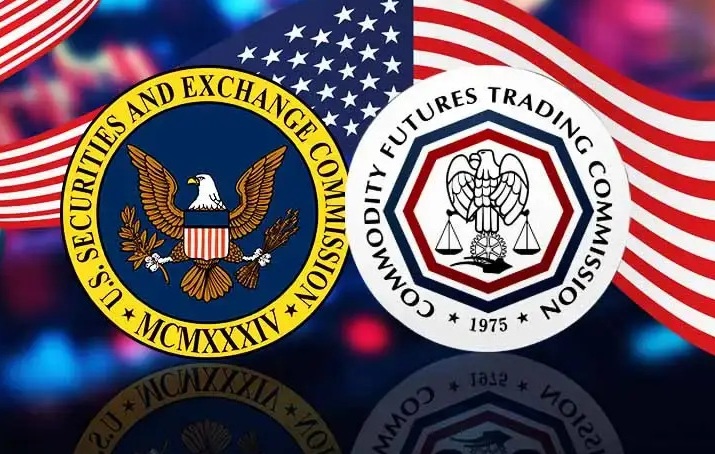
- The U.S. Securities and Exchange Commission and Commodity Futures Trading Commission signed an agreement to coordinate oversight of digital assets.
- Regulators will collaborate on defining whether cryptocurrencies are securities or commodities.
- The memorandum creates a coordination framework but does not introduce new regulatory rules yet.
U.S. financial regulators have taken a formal step toward resolving one of the digital asset industry’s most persistent regulatory disputes. The U.S. Securities and Exchange Commission and the Commodity Futures Trading Commission last week signed a memorandum of understanding committing both agencies to a coordinated oversight framework for digital assets.
The agreement establishes a structure for the two regulators to collaborate more closely across the crypto sector. Under the memorandum, the SEC and CFTC will hold regular joint meetings, share supervisory data, and coordinate communications with companies operating in digital asset markets.
The arrangement represents a deliberate effort to dismantle the regulatory fragmentation that has defined U.S. crypto oversight in recent years.
While the agreement does not immediately change existing rules, it signals a shift toward institutional coordination after years of jurisdictional conflict between the agencies.
SEC, CFTC Move Toward Shared Digital Asset Definitions
At the center of the memorandum is a commitment to address the most contentious question in U.S. crypto regulation: how digital assets should be classified.
The agreement states that the SEC and CFTC will seek to clarify product definitions through joint interpretations and rulemakings. That objective directly targets the core dispute that has shaped the regulatory landscape, whether a given digital asset should be regulated as a security under SEC authority or as a commodity under the CFTC. SEC Chair Paul Atkins said this in prepared remarks released alongside the announcement:
“More than aligning our rules, a harmonized framework also demands coordinating our responses to the firms that operate within it, including those that have questions of interpretation or request exemptive relief.”
If implemented as envisioned, the arrangement would introduce a more consistent process for firms seeking regulatory clarity. In theory, companies attempting to determine whether a token qualifies as a security or a commodity would receive the same answer regardless of which agency they approach first.
Such consistency has been largely absent in the U.S. market. Exchanges, custodians, and digital asset issuers have spent years navigating conflicting interpretations from regulators, leaving firms uncertain about which compliance framework applies to their operations.
Regulators Plan to Coordinate Market Oversight
The memorandum also extends beyond asset classification to the operational mechanics of regulated markets. Both agencies pledged to coordinate updates to supervisory frameworks governing clearing and margin requirements, trade data reporting, and intermediary oversight.
These areas have historically produced conflicting regulatory requirements for firms registered with both regulators. Dual-registered entities, including certain trading platforms and derivatives intermediaries, have often faced overlapping obligations as the SEC and CFTC applied different standards to similar activities.
Greater alignment in these areas could reduce compliance friction for firms operating across both securities and derivatives markets.
The cooperation could also extend into the agencies’ physical operations. Bloomberg reported that regulators are considering a potential consolidation of office space, with the CFTC possibly relocating to the SEC’s headquarters building. While still under discussion, such a move would signal a deeper level of coordination between the agencies.
Agreement Stops Short of New Rules
Despite the significance of the announcement, the memorandum itself does not establish binding regulatory standards.
Instead, it serves as a framework for collaboration. Any concrete regulatory changes would still need to proceed through formal rulemaking processes at each agency, including proposed rules, public comment periods, and final adoption.
For the digital asset industry, that distinction is consequential. While the memorandum signals a shift toward regulatory alignment, companies remain subject to the same legal uncertainties until formal rules are introduced and finalized.
The timeline for broader regulatory clarity is also shaped by developments in Congress. A digital asset market structure bill currently moving through the Senate has stalled, with Senate Majority Leader John Thune telling Punchbowl News he does not expect the chamber to take it up before April.
Congress is also approaching a two-week Easter recess, limiting available floor time even if the legislation advances through committee.
At the same time, lawmakers remain engaged in negotiations over Department of Homeland Security funding. President Donald Trump has also stated that Congress must pass the Safeguard American Voter Eligibility Act before he would sign other legislation, further complicating the legislative agenda.
The SEC-CFTC memorandum represents the clearest institutional signal yet that the agencies intend to resolve their long-running jurisdictional conflict over digital assets.
But the agreement stops short of establishing new rules. Until the agencies translate coordination into formal rulemaking – and until Congress advances a broader market structure framework – the regulatory architecture for digital assets in the United States remains unsettled.
Categories:
Talik Evans
Journalist and Financial Analyst
Talik Evans is a financial writer and crypto researcher with a growing focus on digital assets, Bitcoin markets, and blockchain innovation. Since 2021, she has been exploring the world of cryptocurrency, writing about everything from exchange comparisons to regulatory updates and security practices.